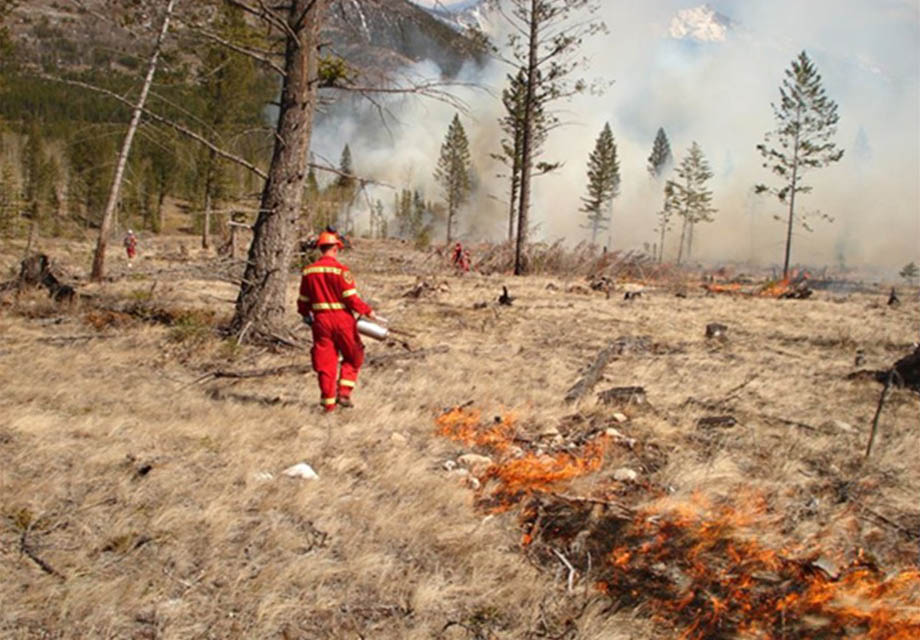
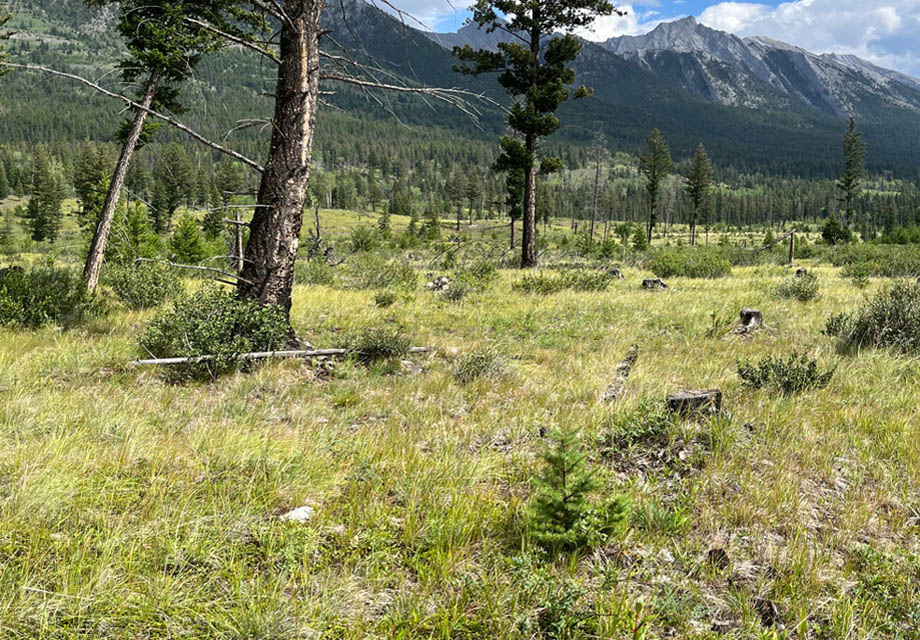
Community fire departments from Bow Valley doing spring maintenance of Carrot Creek fuelbreak in ~2005 and the same location 20 years later. Repetitive burning in this part of the fuelbreak created a relatively stable grassland with low fuels and good potential to help contain a wildfire. Unfortunately most the Carrot Creek Fuelbreak has much more risky vegetation conditions.
The Bow Valley has a long history of fuelbreaks– Indigenous peoples maintained them around their traditional campsites, in the late 1880s the superintendent of Canada’s first national park was working with the Canadian Pacific Railroad to clear fuels to protect their new hotel. Over the next 11 decades cycles of fuelbreak construction followed the unique combinations of political concerns and availability of labour and funds. The situations varied, but one thing they all had in common is that almost none of this work was ever maintained. Recognizing this problem, in the late 1990’s Banff’s fire managers of-the-day (Ian Pengelly and Brian Low) resolved that the recently cleared Carrot Creek Fuelbreak should have a maintenance plan, and set about working with the valley’s community fire departments in a prototype maintenance regime. This was ahead of its time. Like fuelbreaks of the past, Carrot Creek was forgotten, and much of the area is rapidly overgrowing. The Carrot Creek Fuelbreak and adjacent Fairholme Prescribed Burn are now becoming existential threat to Harvey Heights and adjacent communities.