No other factors influence fire risk and behavior as much as human use and governance. Historically this determined the location and timing of most ignitions, and today whether fires will be suppressed or added back into the landscape. These past and present actions cumulatively create a pattern of when fires occur, and how much fuel is available to burn as influenced by weather and terrain.
Governance is probably the most important, but most neglected side of the firebox. After a tragic fire, communities, businesses, and government agencies naturally tend to blame the weather, the ignition source, or failed suppression actions. This diverts attention from the long-term cultural patterns that often drive fire behavior.
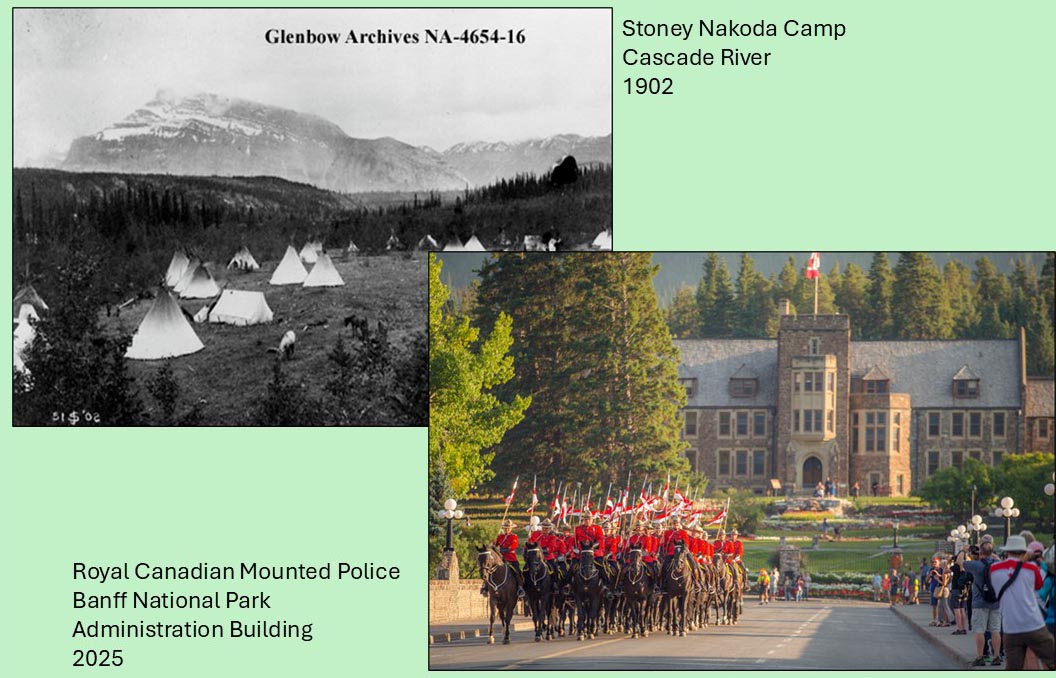
Banff has a well-documented history of governance. Contributions to understanding how these complex human social dynamics influence fires and fire risk can be inserted in this section. For folks more specifically interested in the long-term Indigenous role in ecological management we’ll set up another section to fit these stories in.
Return to “Burning Banff” main page