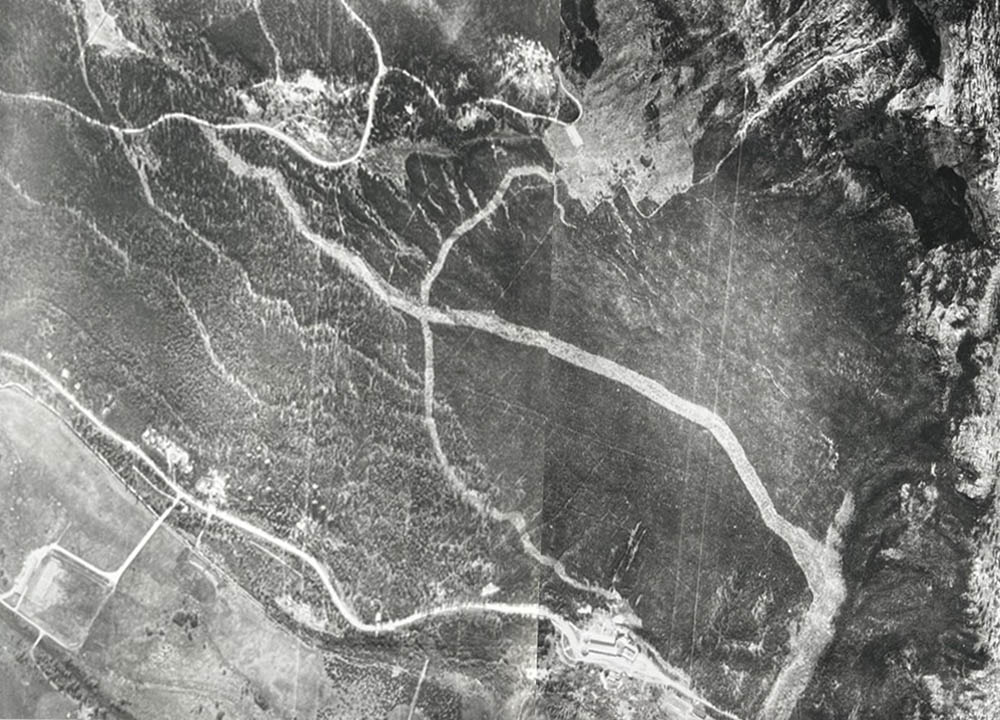
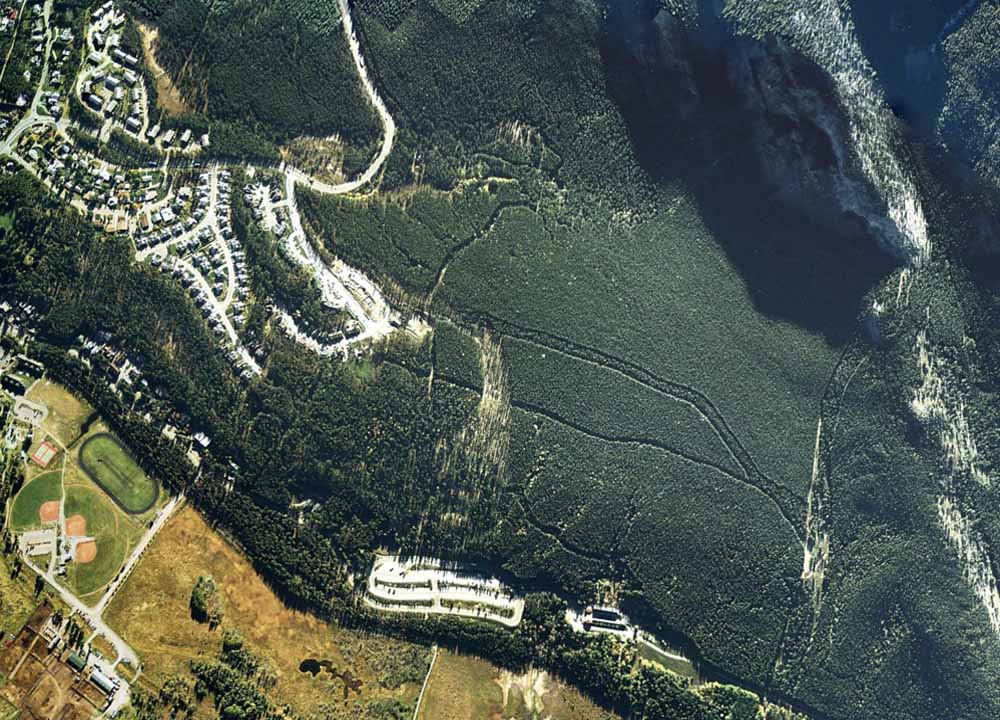
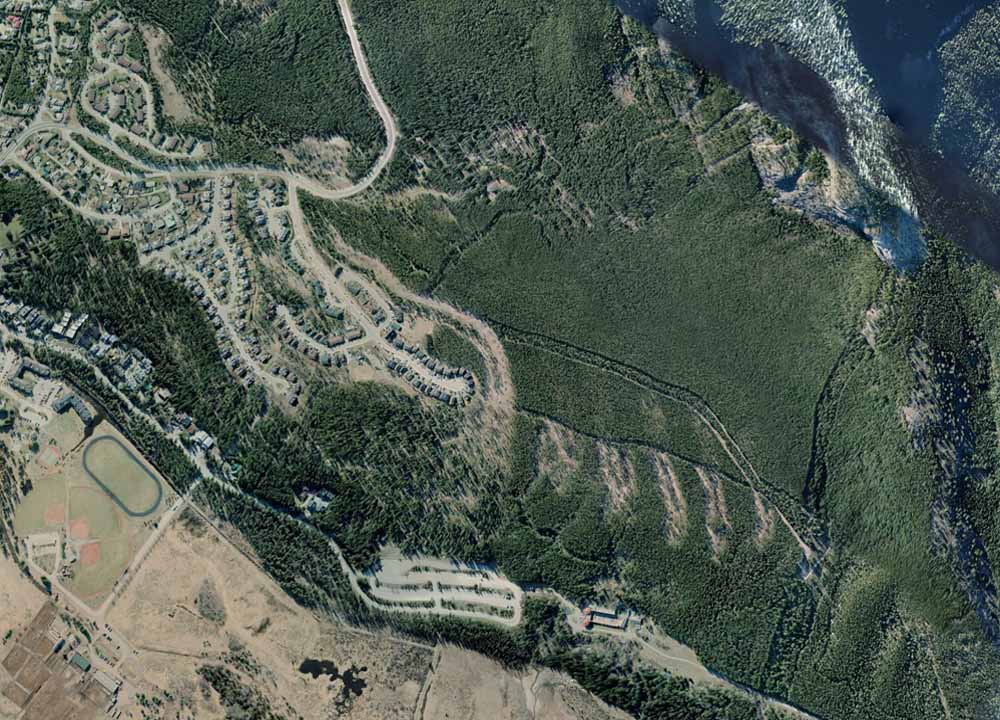
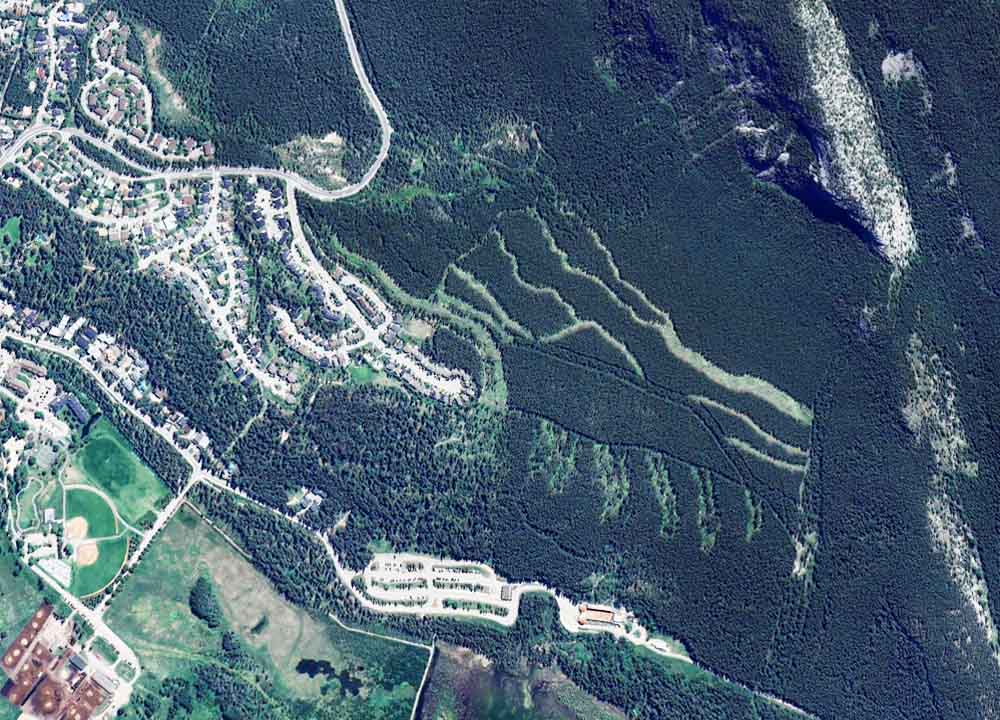
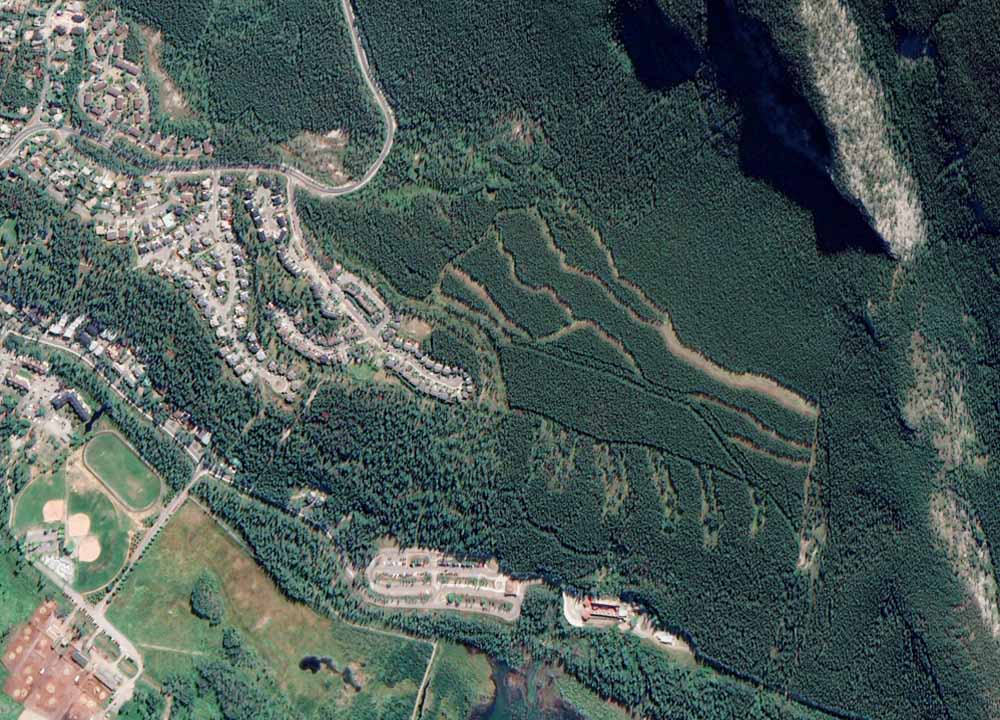
Fuelbreaks on Sulphur Mountain in ~1923 (National Air Photography Library) and a series of GoogleEarth images from 2010 to 2023.
Likely Canada’s largest fuelbreak at the time was cut between ~1914 and ~1917 on the lower slopes of Sulphur Mountain to protect the town of Banff, the hotsprings facilities so important for tourism, and the iconic Banff Springs Hotel. Construction of the fuelbreak and other some other work projects at the time have become infamous because they were done by recent Canadian imigrants imprisoned during World War 1 because they came from eastern European countries, and were deemed a threat security threat.
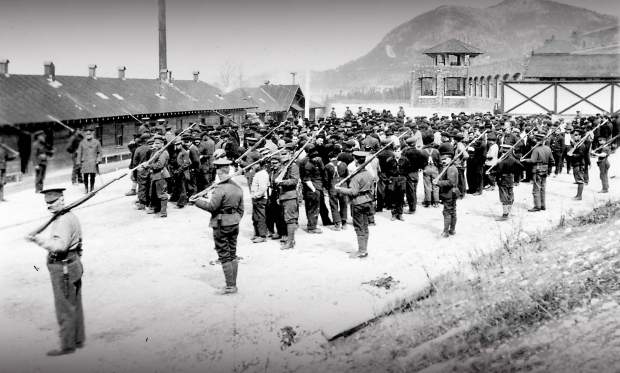
Austro-Hungarian prisoners of war at Cave and Basin camp.
From the 1940s to 1980s the Sulphur Mountain fuelbreaks were not routinely maintained. In the 1990s as new Town of Banff subdivisions were built in the area, and Park Canada began a new program to renew and expand the historic fuelbreaks on the north east side of the mountain, and cut a massive fuelbreak on western slopes of the mountain. In the most recent images more elaborate clearings are visible as fire managers began to consider how to restrain fire spread up the mountain driven a “wind-eddy” that forms on the leeward side of the mountain during the strong west and southwest winds that occur on almost all days of high fire danger near Banff.
Eventually the Town of Banff citizens and nearby businesses should consider managing this fuelbreak by imbedding it in a local community forest. Parks Canada has broader responsiblilties to manage fire across Banff National Park, and contribute its specialized Incident Command Teams and fire crews to regional and national emergencies. More importantly, eventually it could be the Bow Valley’s local community forester, likely imbedded in the fire departments who will be the key individual who maintains the fuelbreaks, know how to use them, and saves the town on the fateful day when an ember shower, followed by a wall of fire flashes across the slopes of Sulphur Mountain. But that will hopefully all be in a distant future.