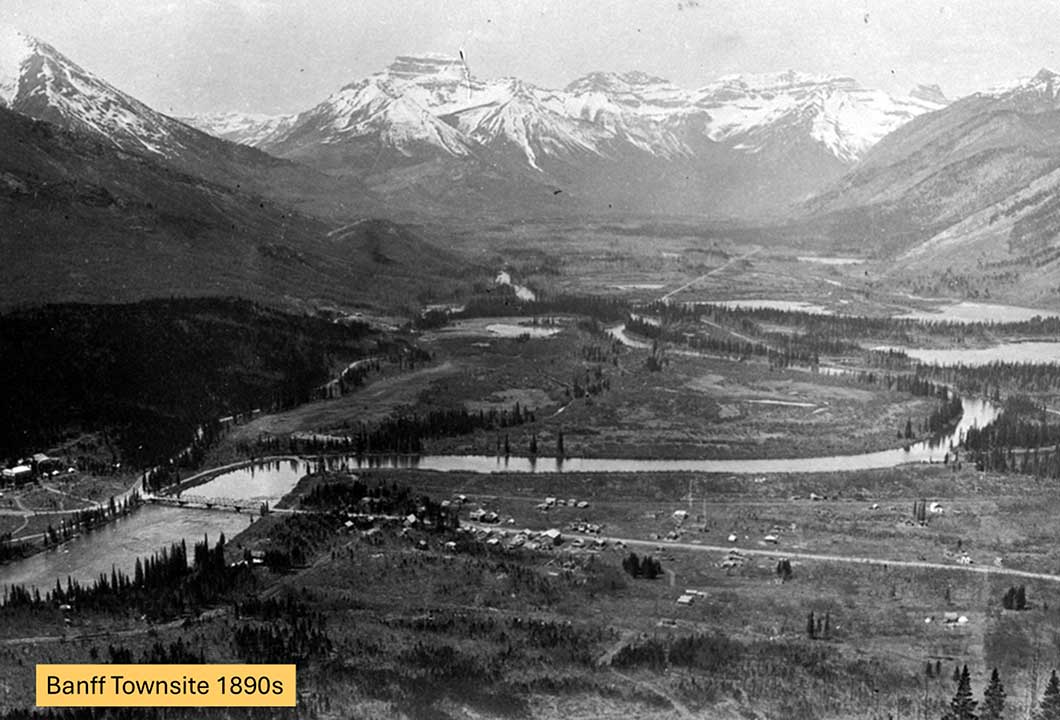
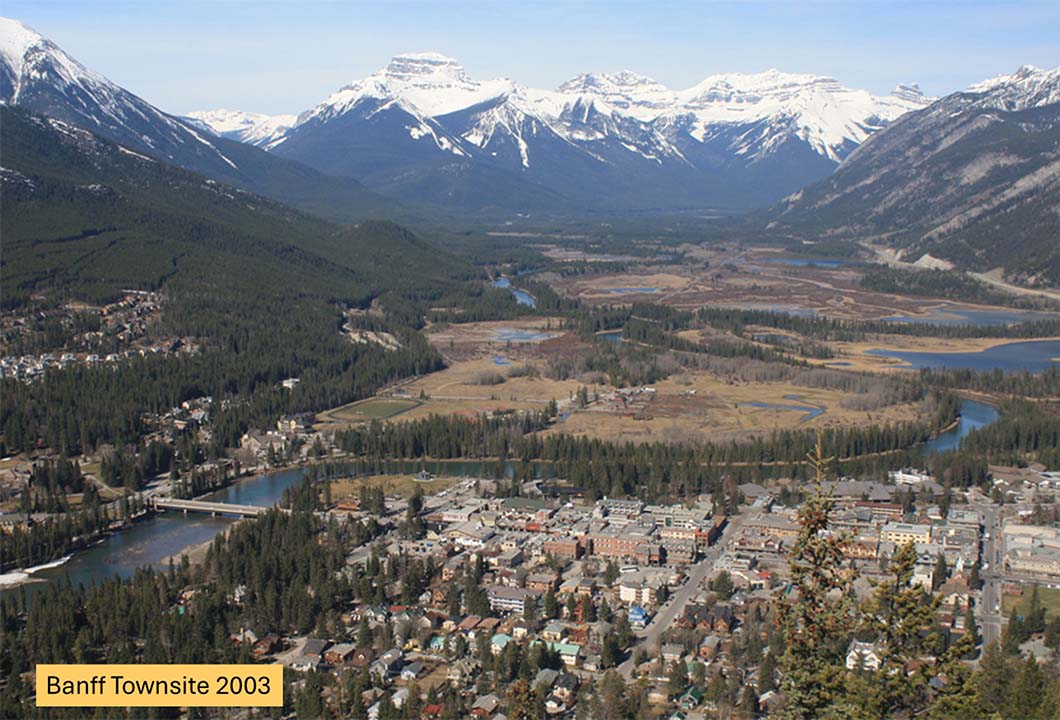
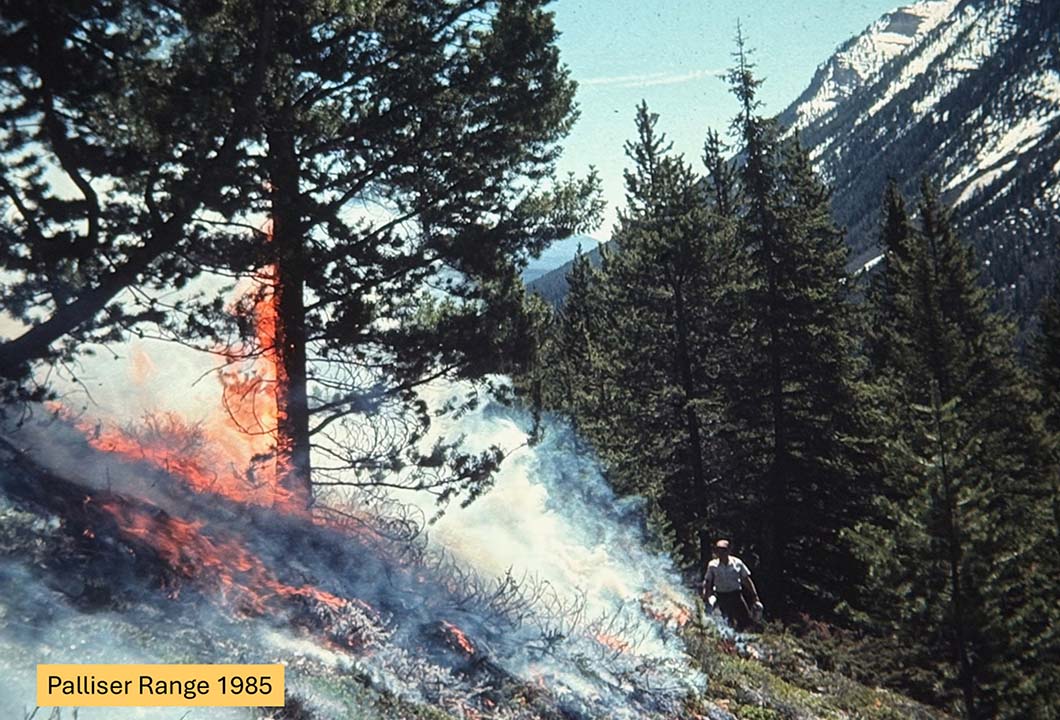
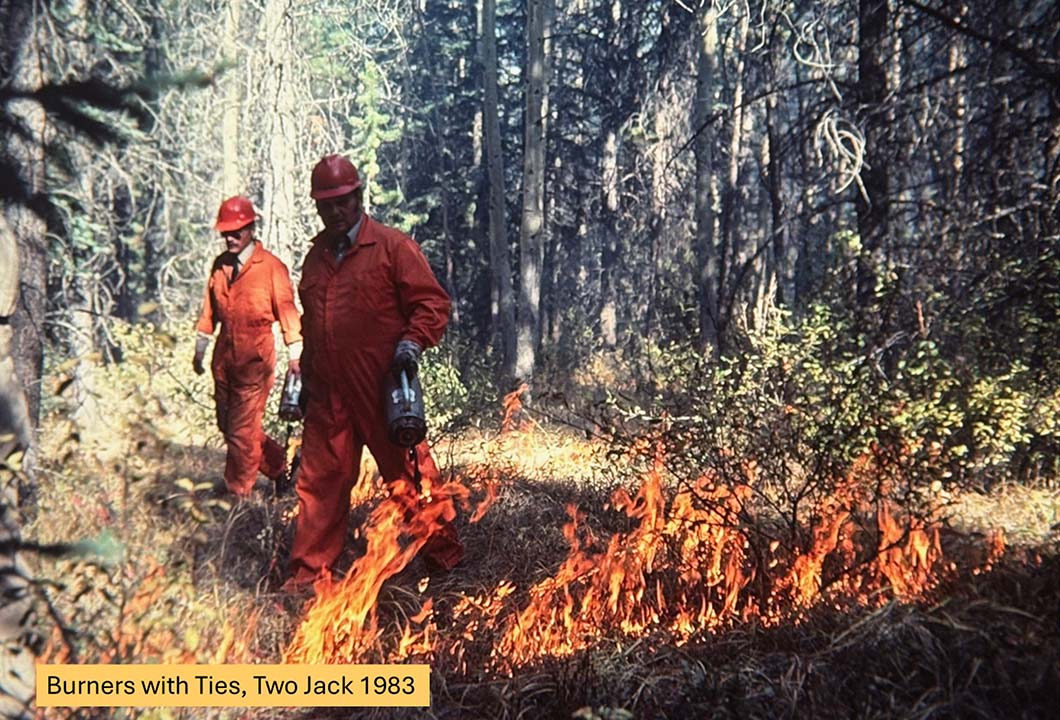
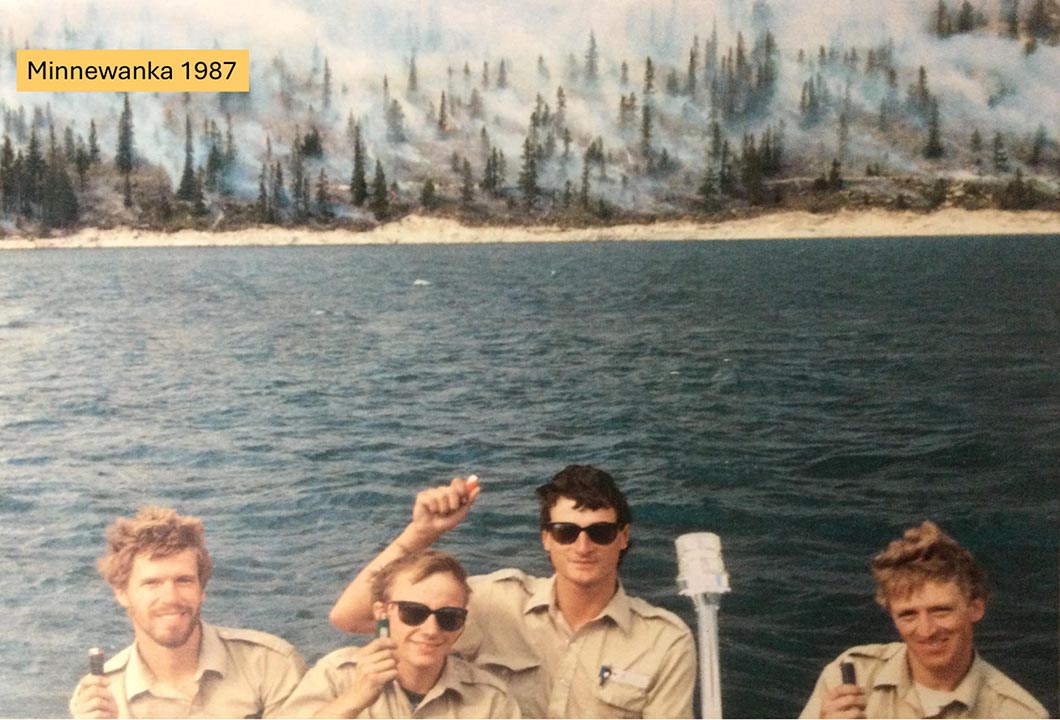
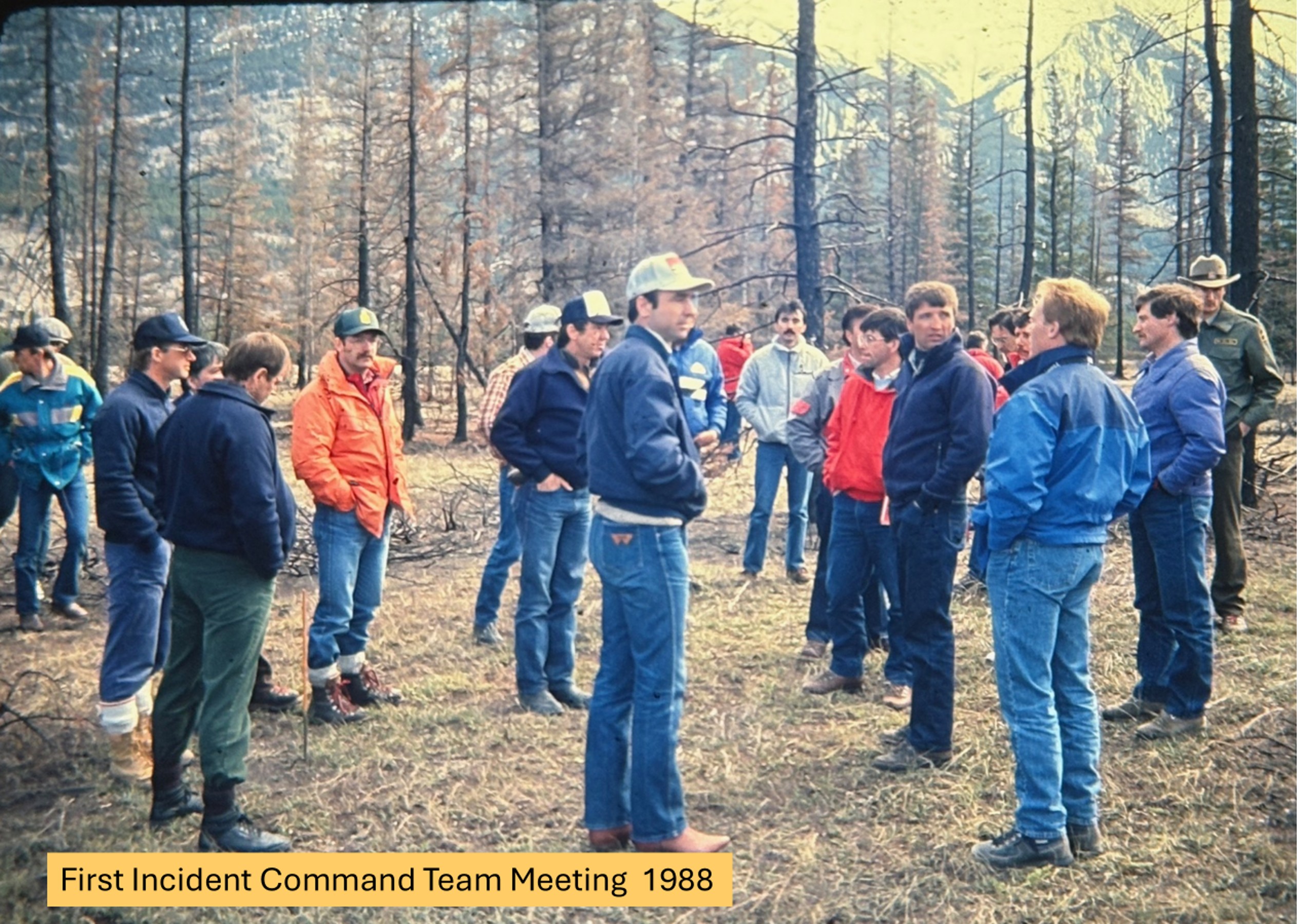
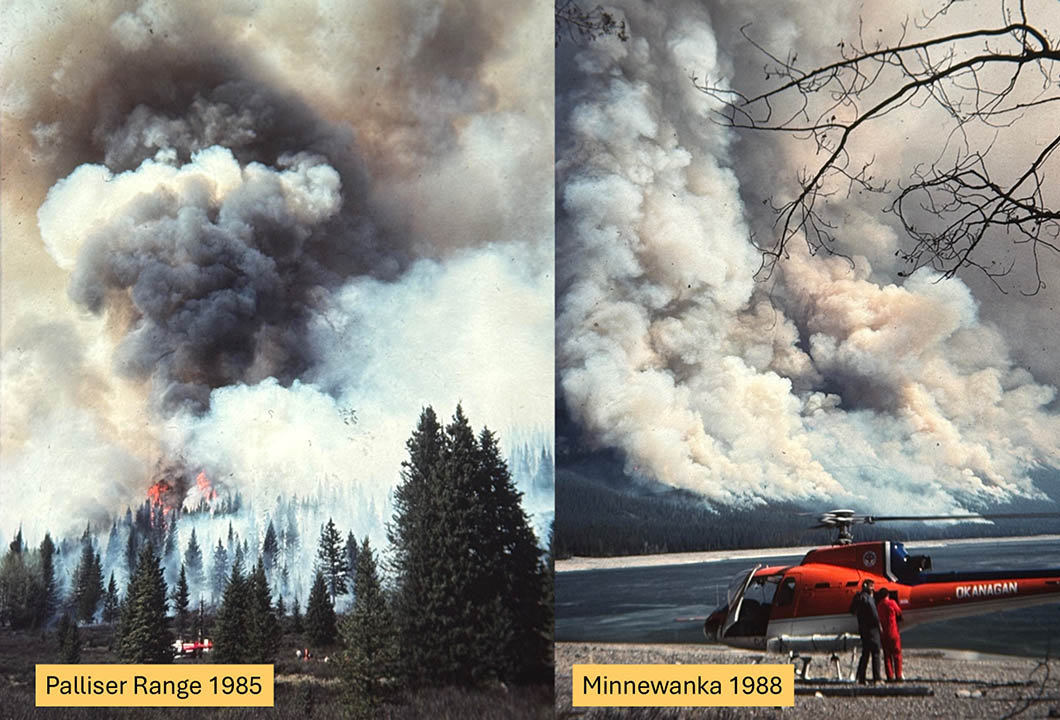
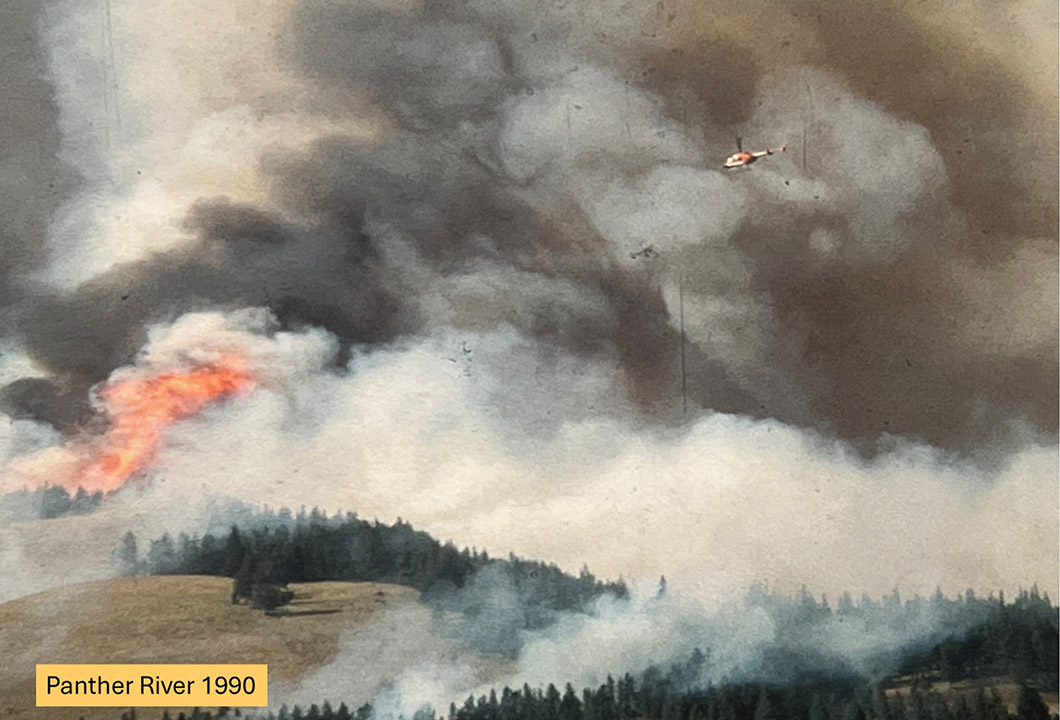
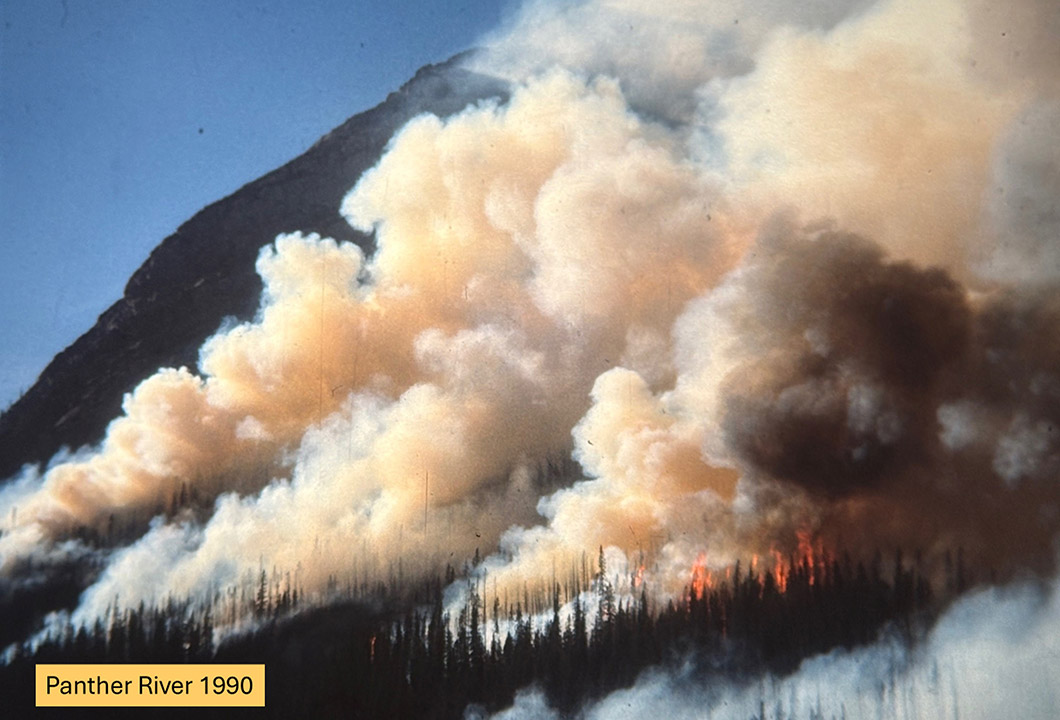
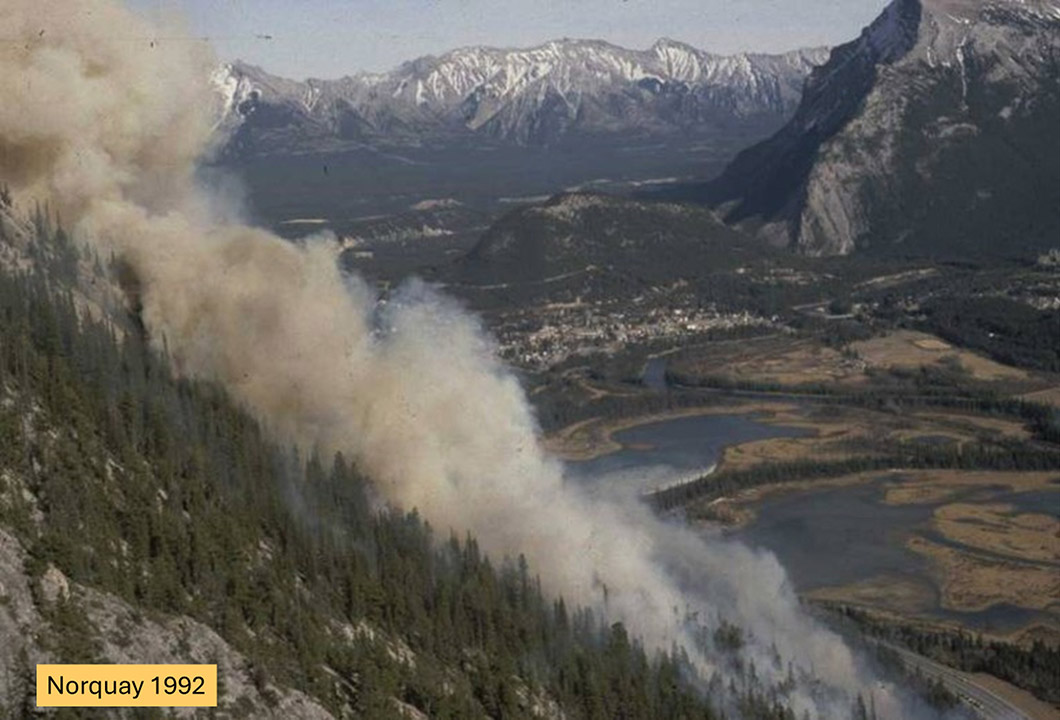
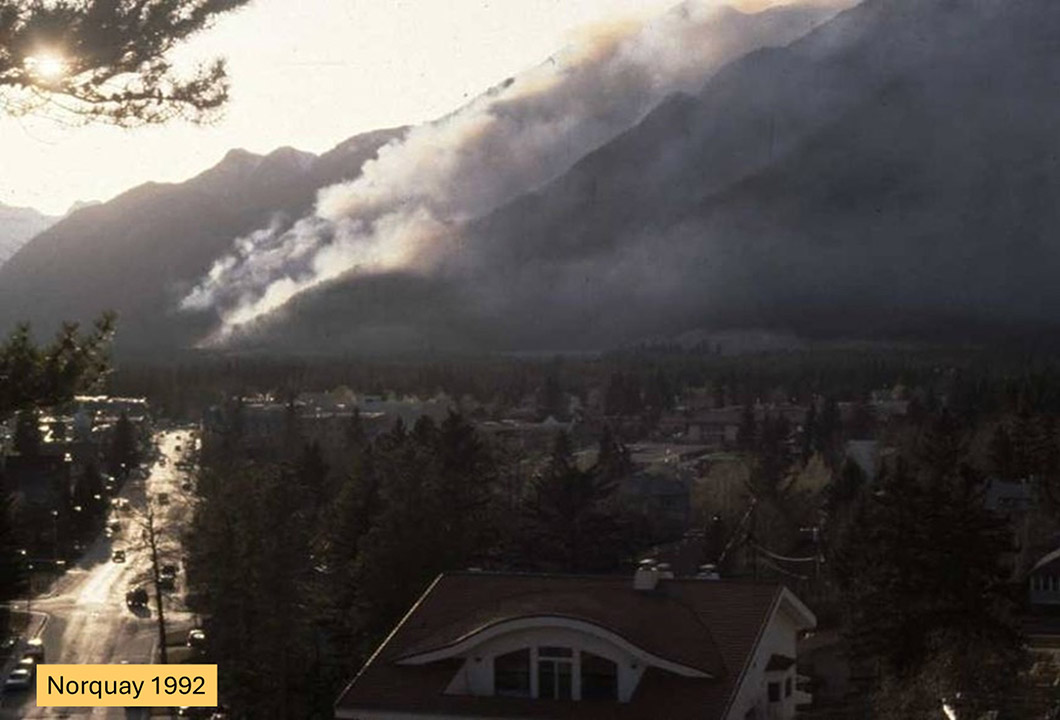
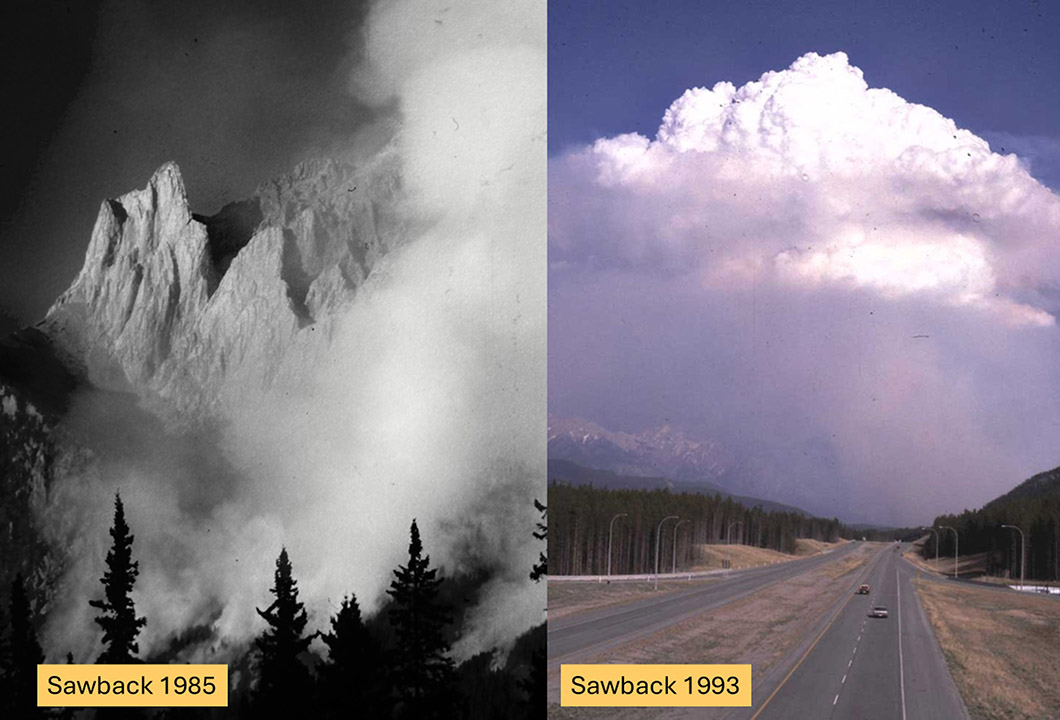
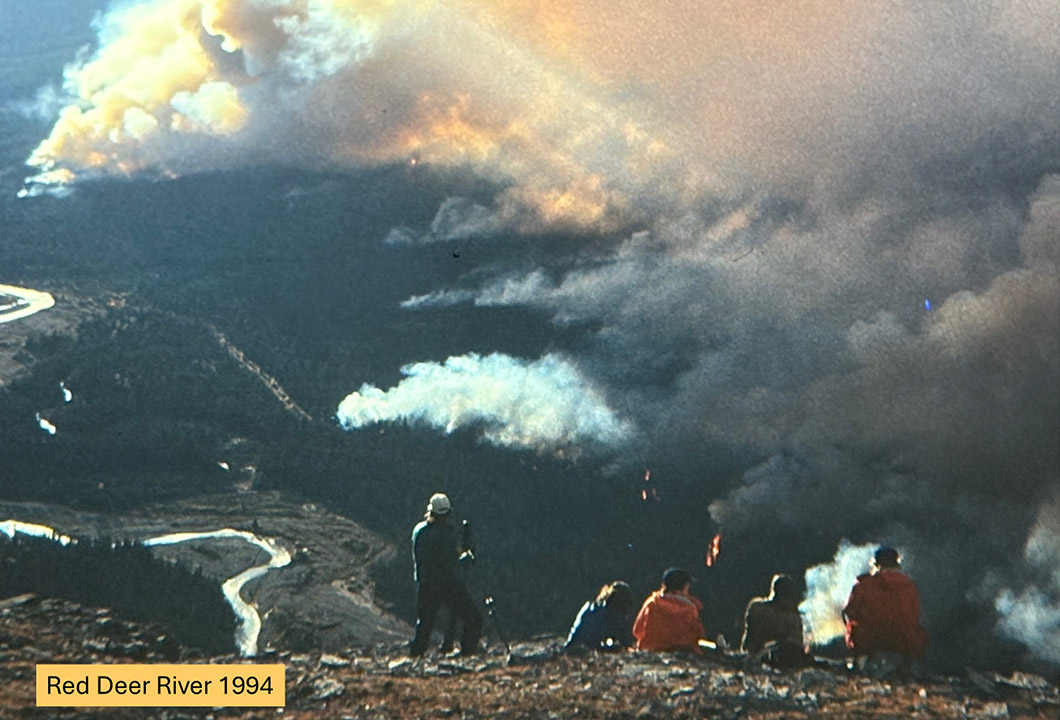
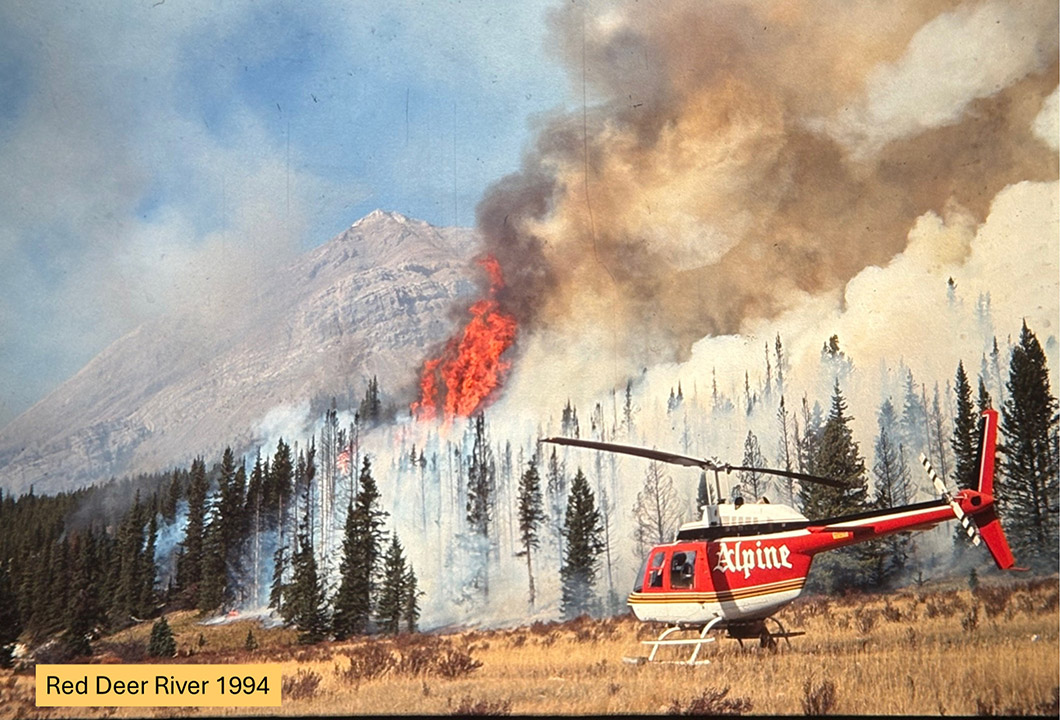
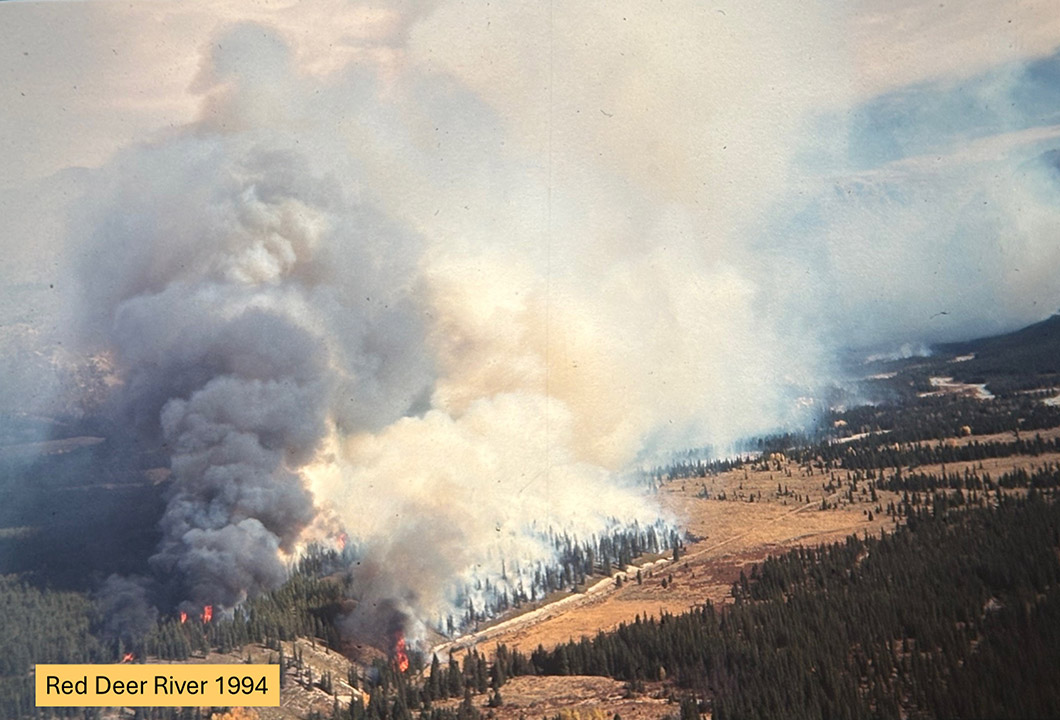
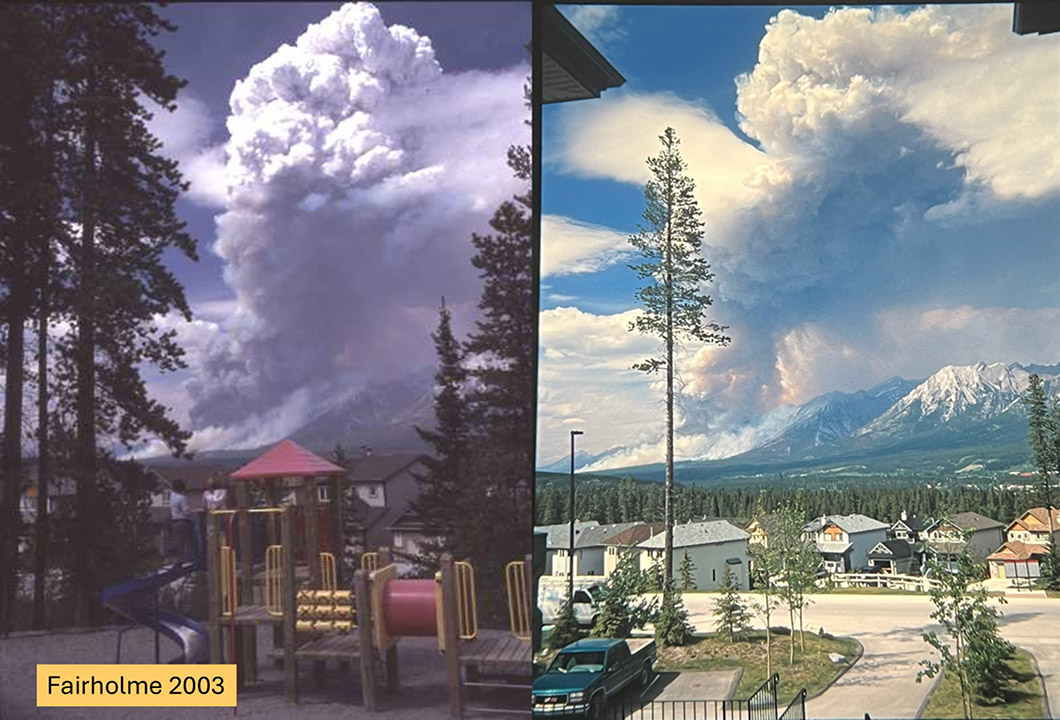
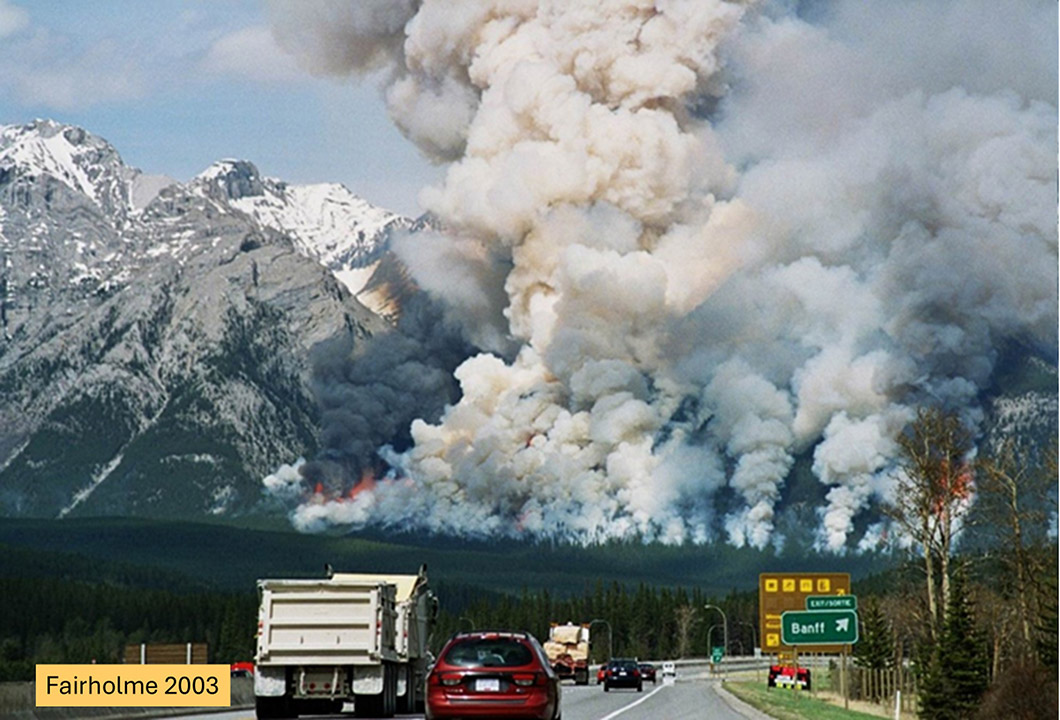
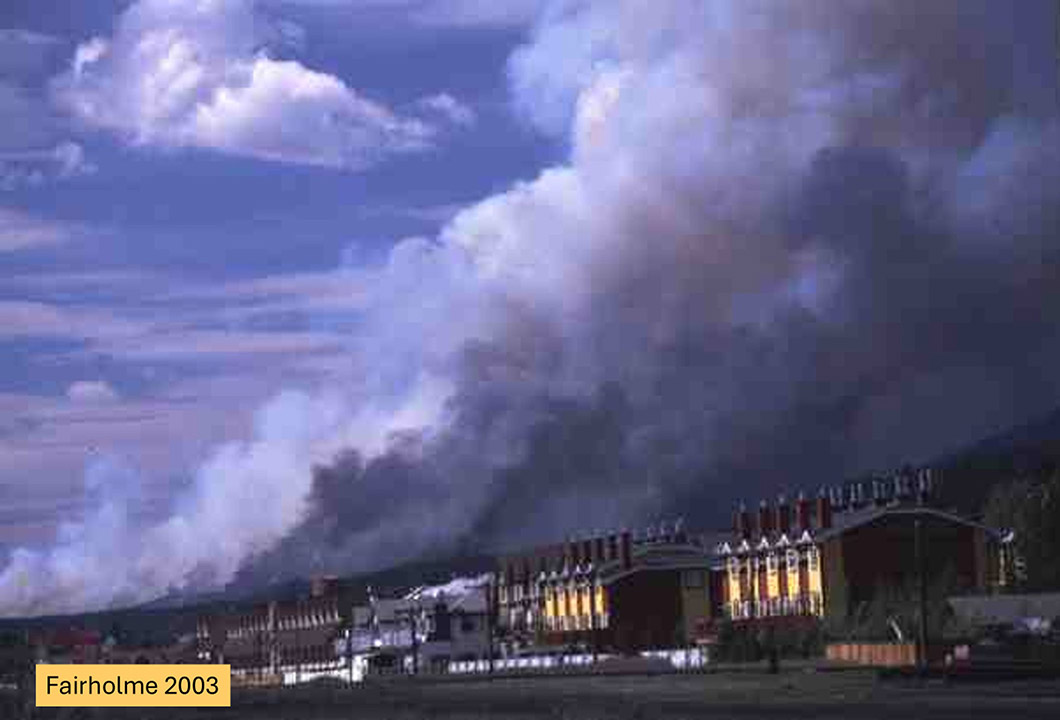
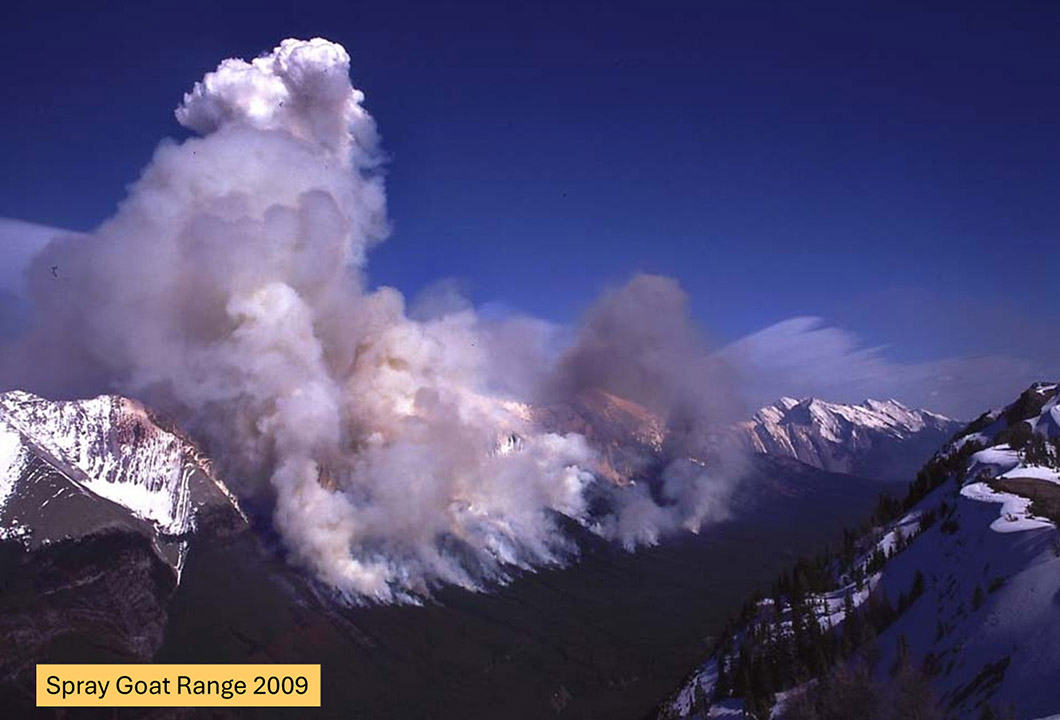
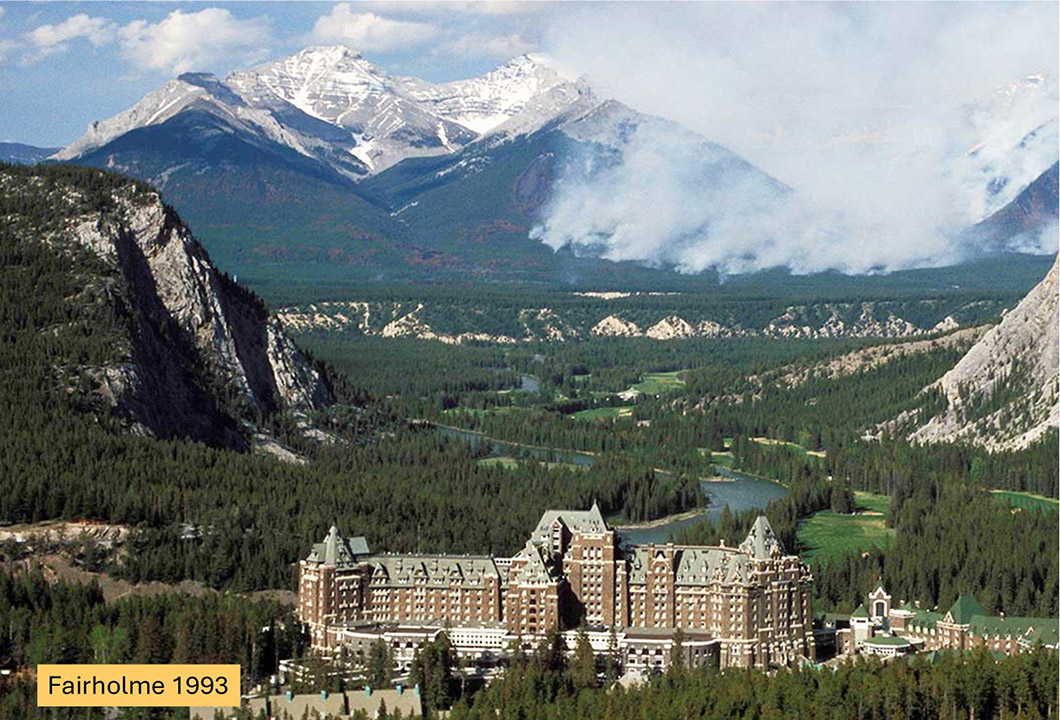
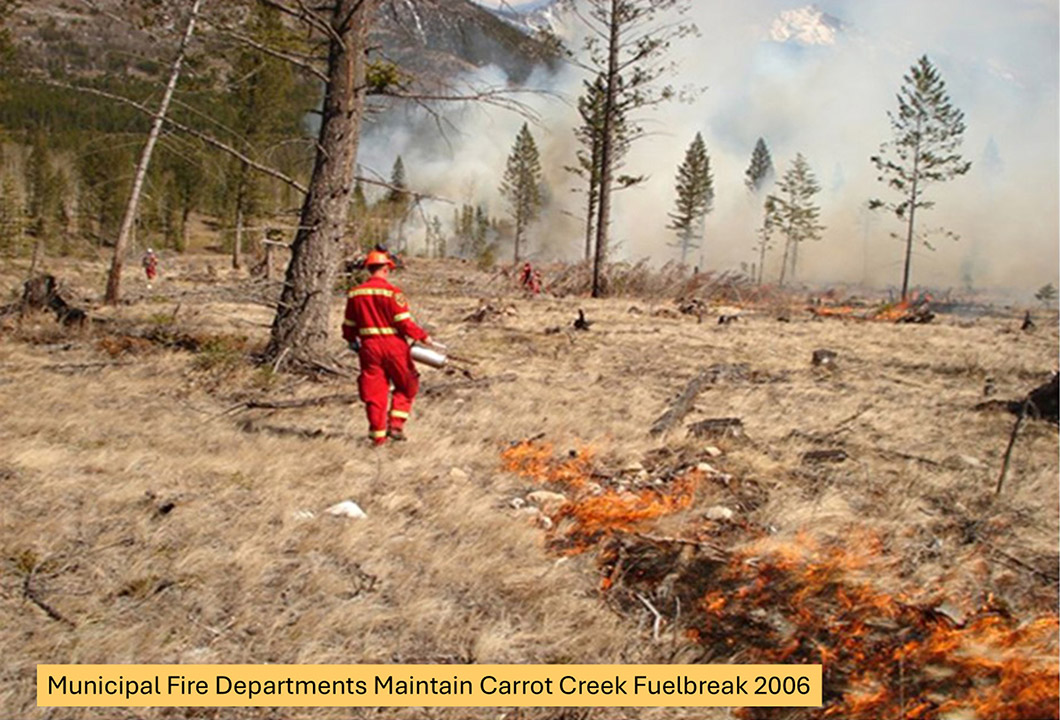
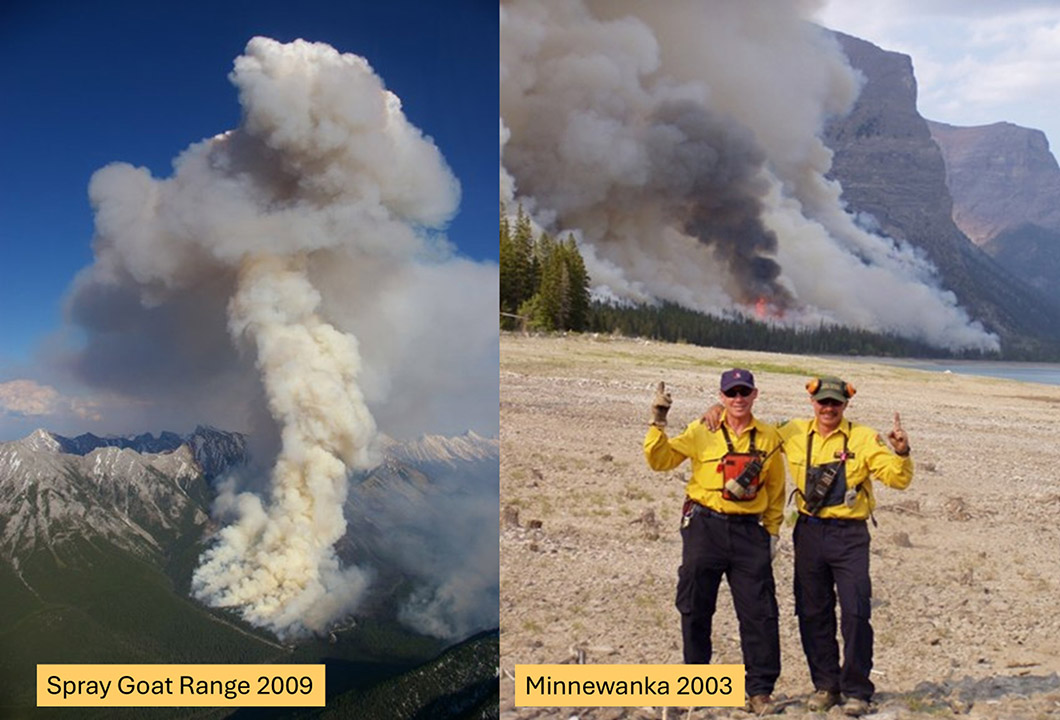
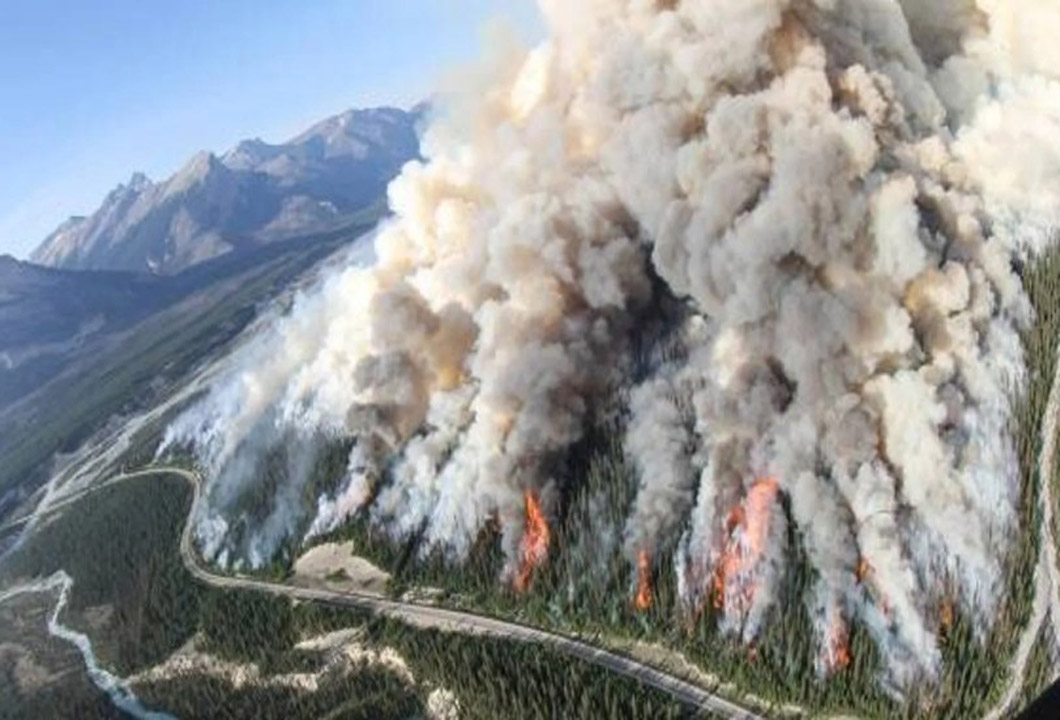
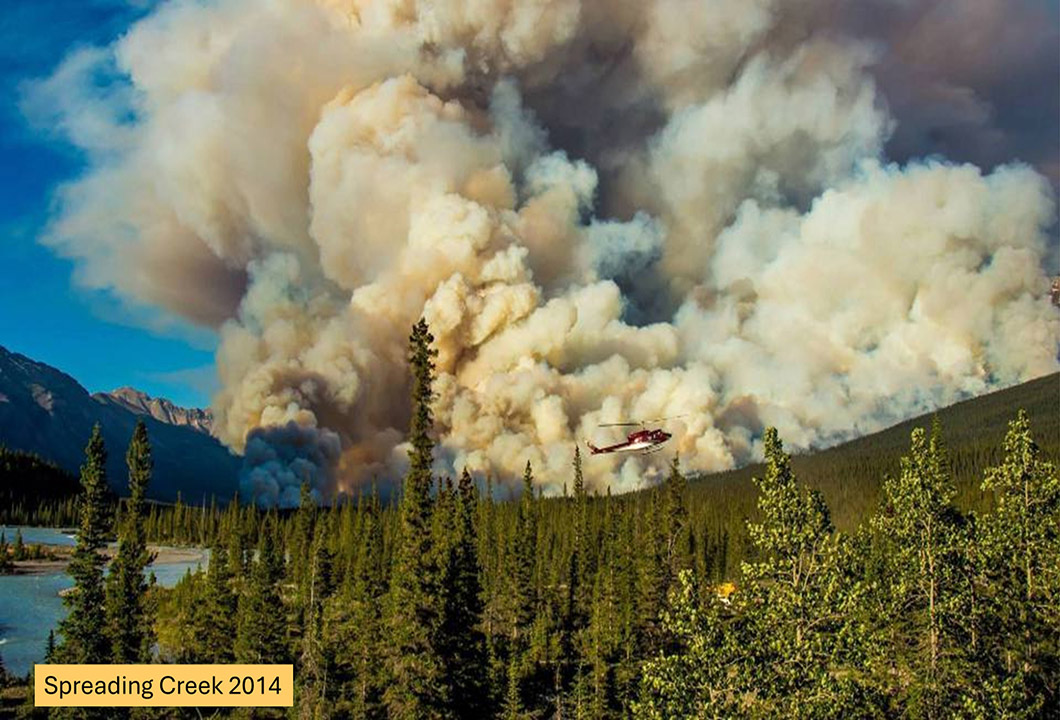
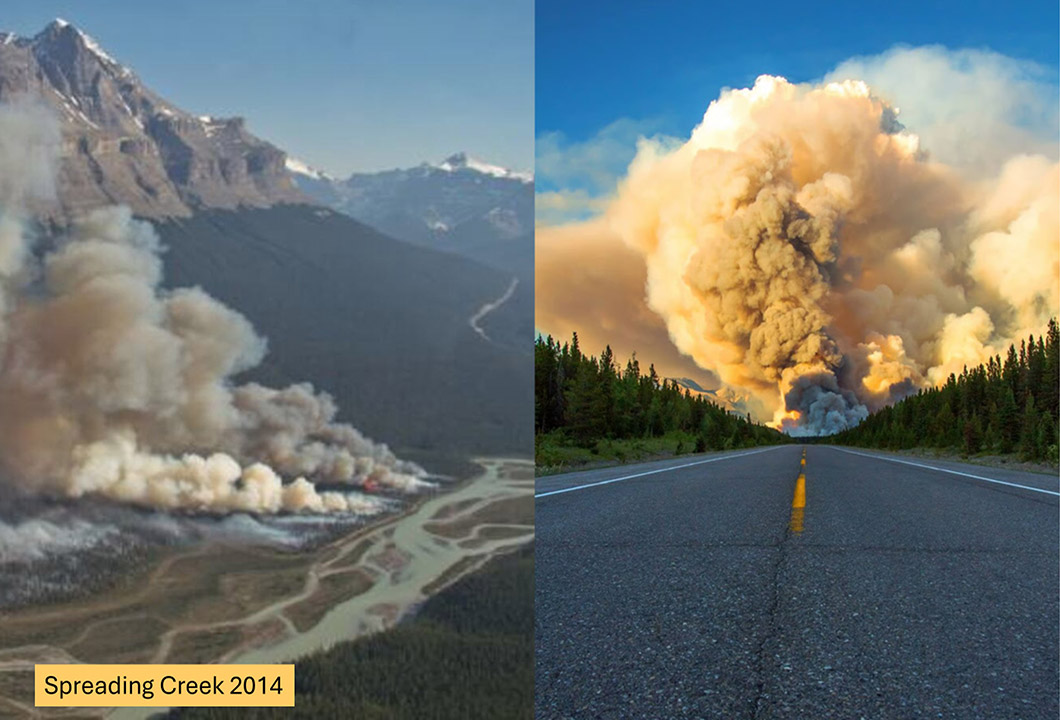
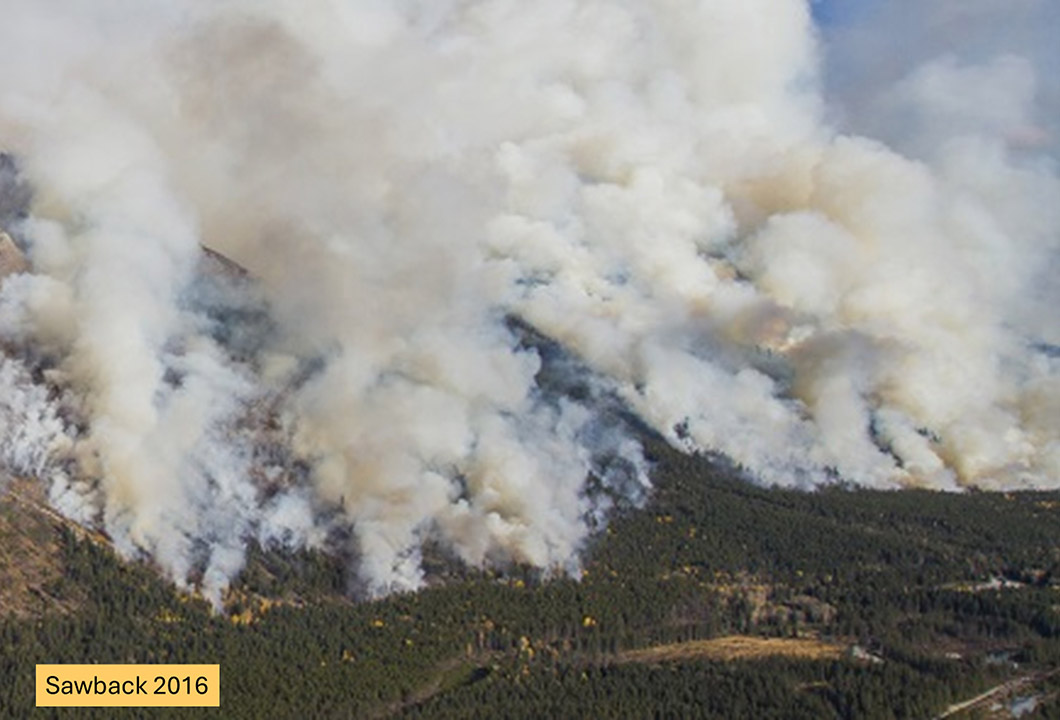
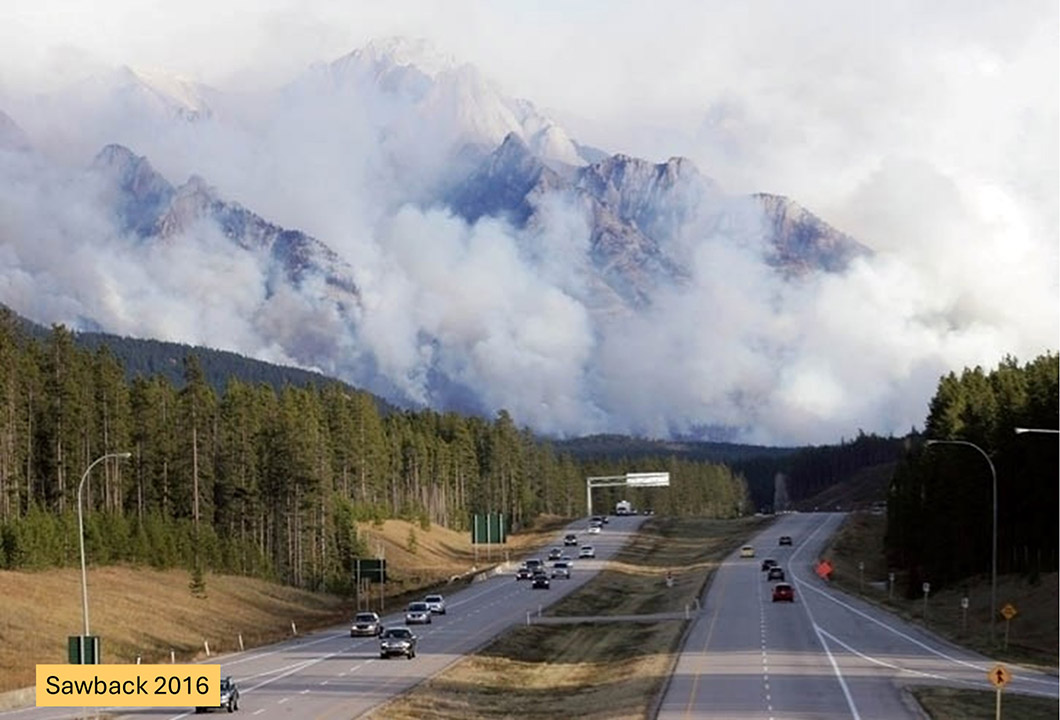
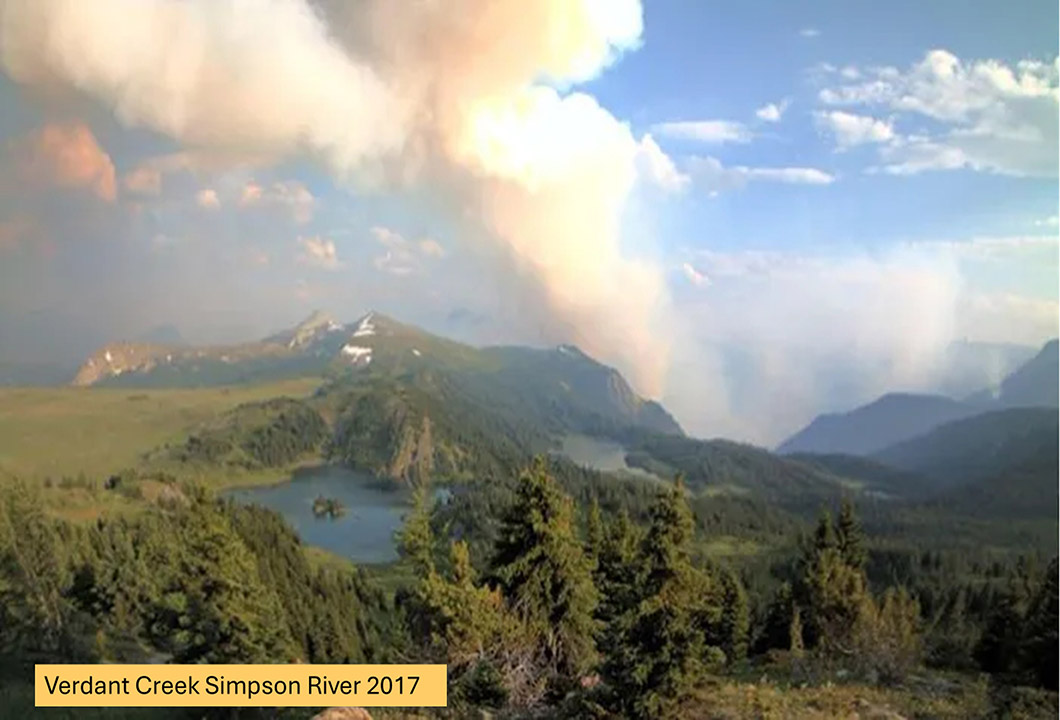
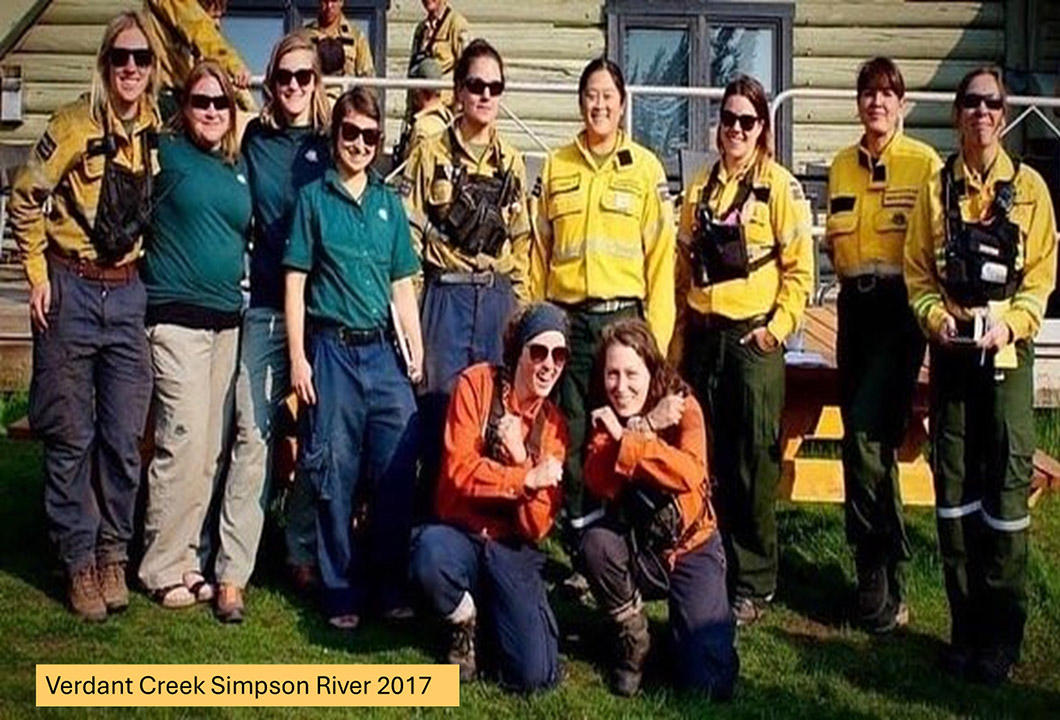
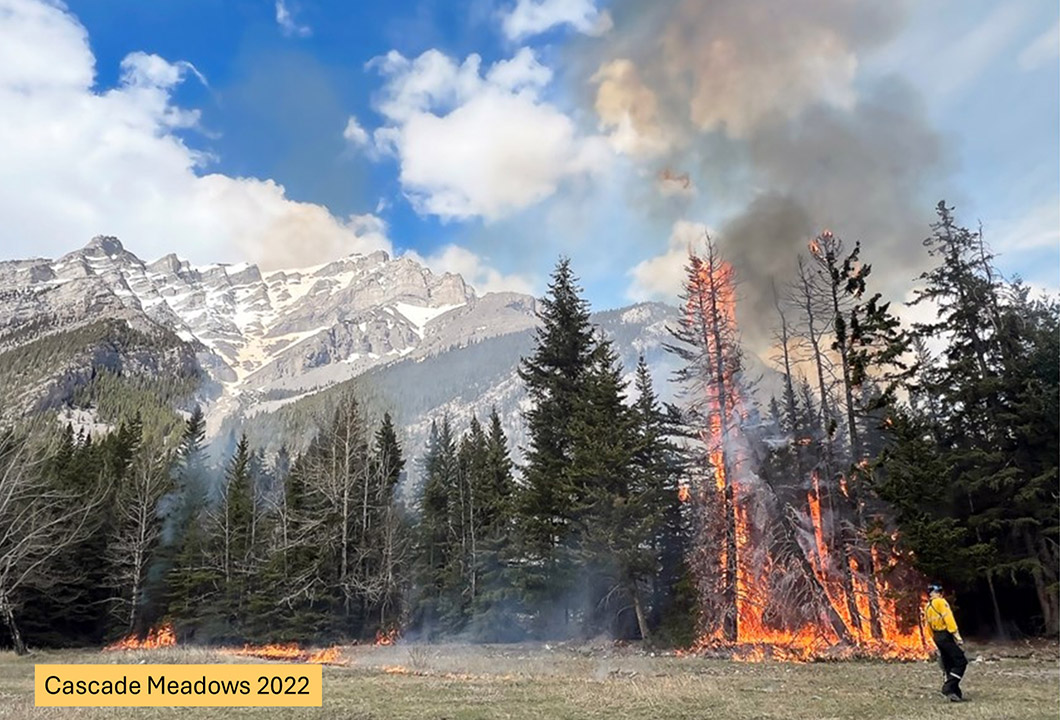
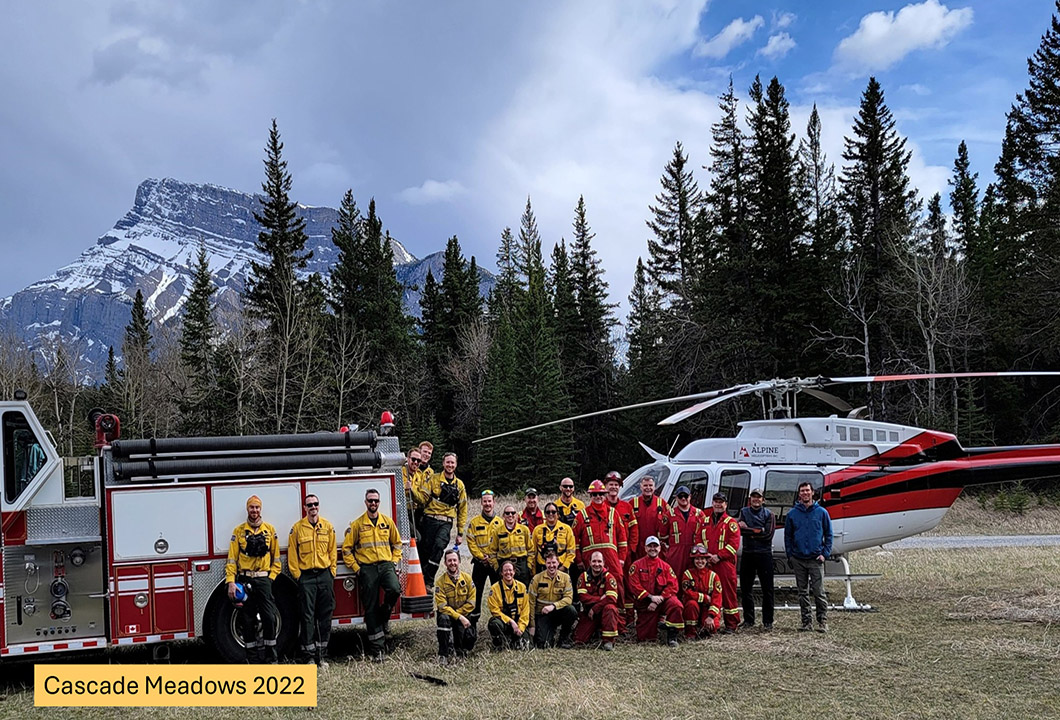
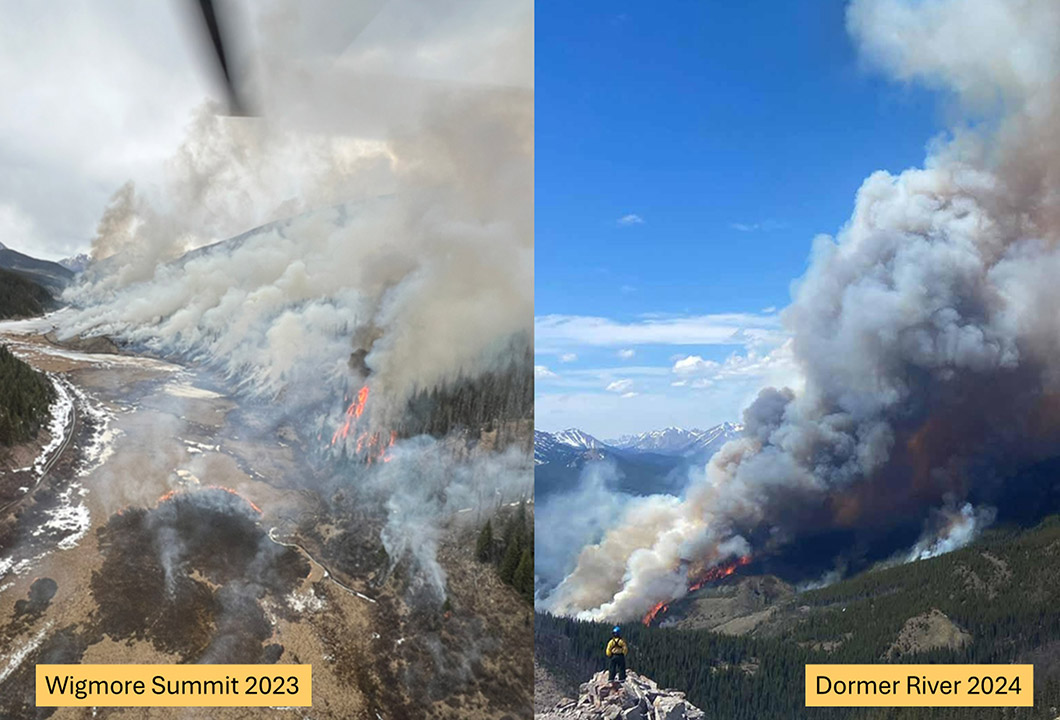
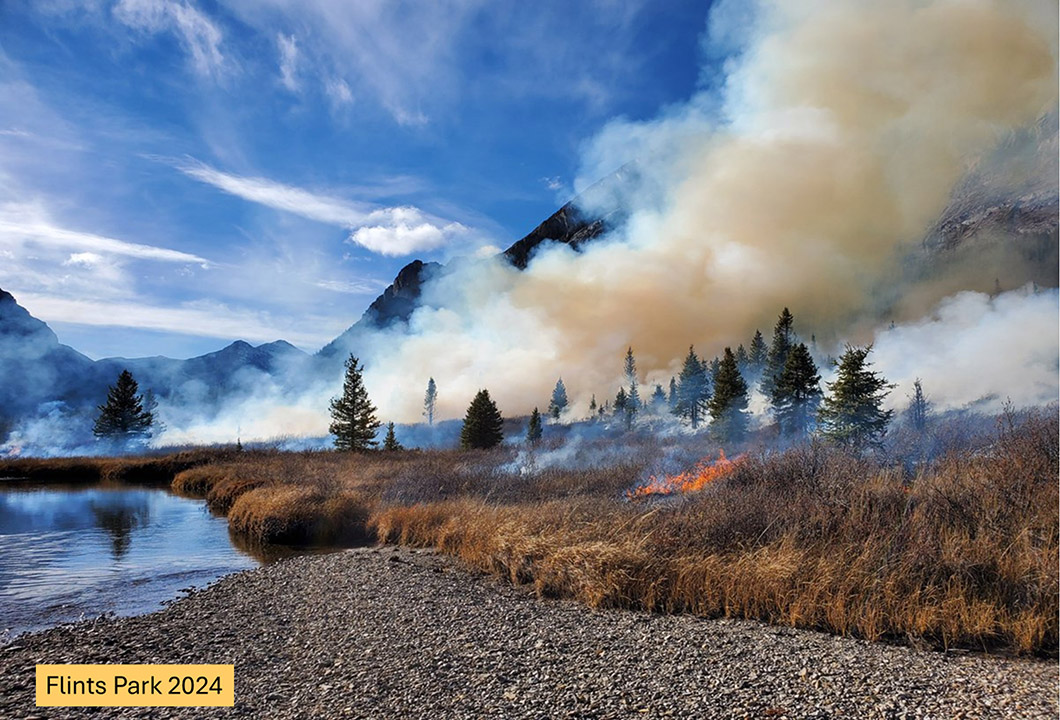
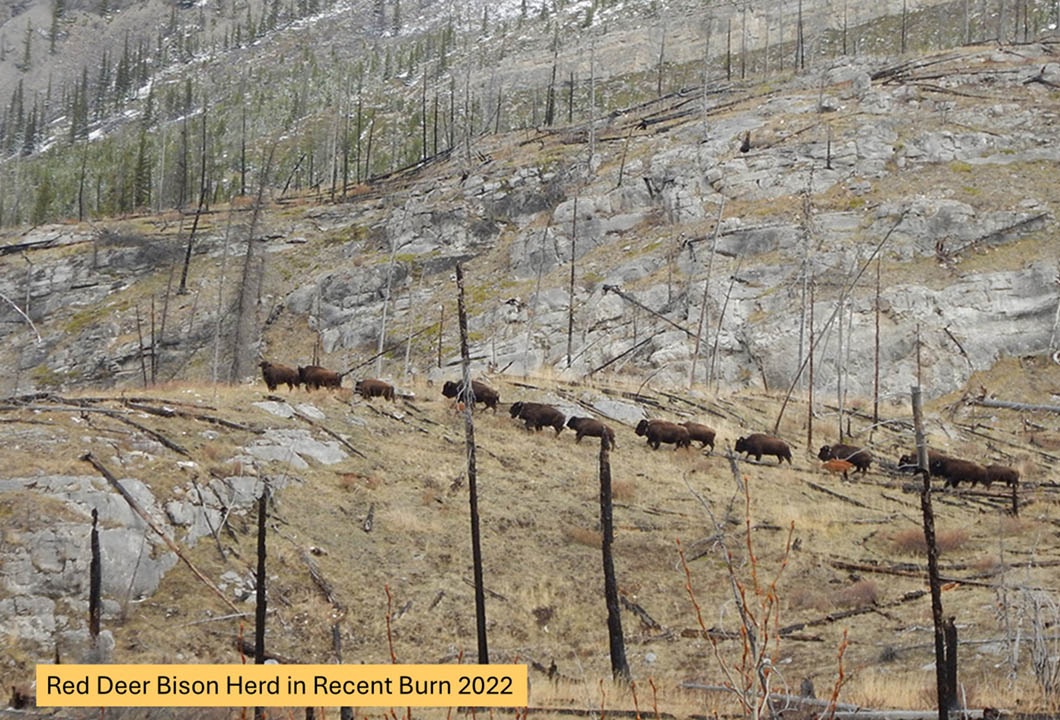
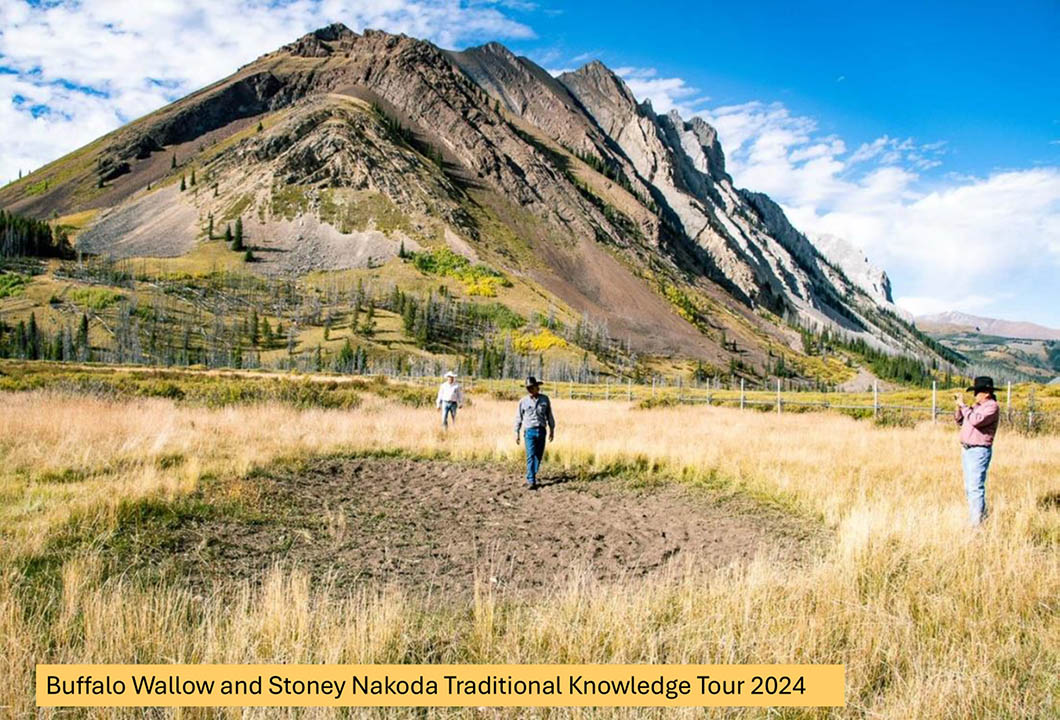
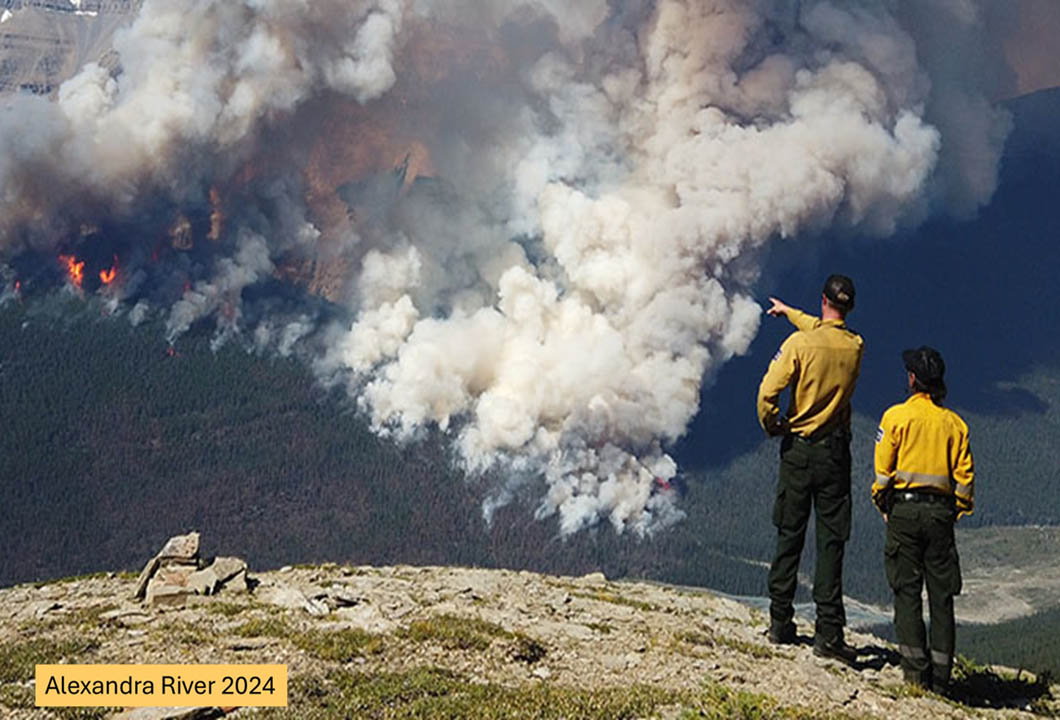
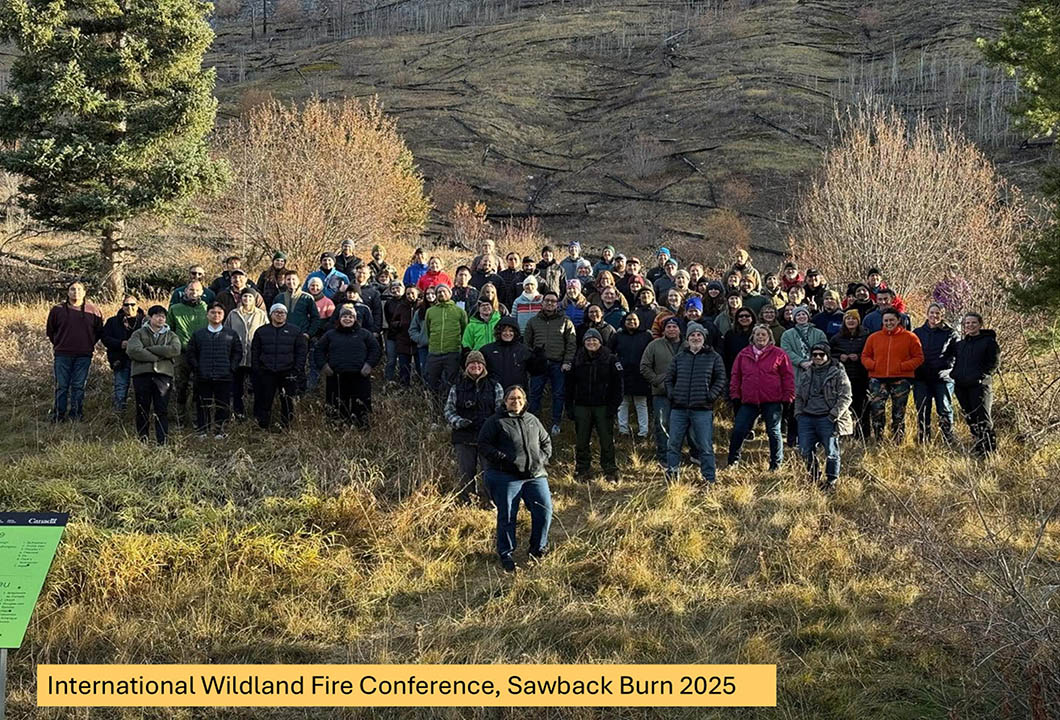
Images of Banff fire management: 1880s to 2020s.
Banff National Park has one of the modern world’s longest standing high-intensity prescribed fire management programs. The park’s management direction shift from total fire suppression in the 1970s to biophysically focussed ignition prescriptions in the 1990s to cultural burning in the 2020s has been controversial. Fire management evolution reflects modern society’s increased understanding of Indigenous ecosystem management and the adaption of numerous species and ecosystems to traditional fire use. Moreover, we now recognize that ongoing fire suppression only increases probability that public safety and human infrasture will be seriously threatened by wildfires.
Overview: Banff as Testing Ground for Wildland Fire Management
Banff National Park the Bow Valley’s role as source of innovation in Canada’s management of wildfires is due to the convergence of several cultural and biophysical factors:
- Establishment of Canada’s first national park in 1885, and the obvious ongoing threat of railway fires to the tourism industry brought federal government funding for fire wardens and fire fighting innovations (pumps, hoses, fuel break clearings).
- Increased understanding of fire’s ecological role and public support for conservation made the park a focal point ecological restoration and maintenance.
- The parks biophysical environment favours prescribed fire use. Key factors include high rocky ridges, narrow valleys, relatively consistent southwest winds and snowmelt patterns, and few lightning-ignited burns.
- Increasing recognition that the park’s long-term fire regime was– due to low lightning frequency—likely a both an ecologically and culturally driven regime.
- High profile eco-cultural projects such as re-introducing bison required prescribed fire use to maintain and restore long-term vegetation conditions.
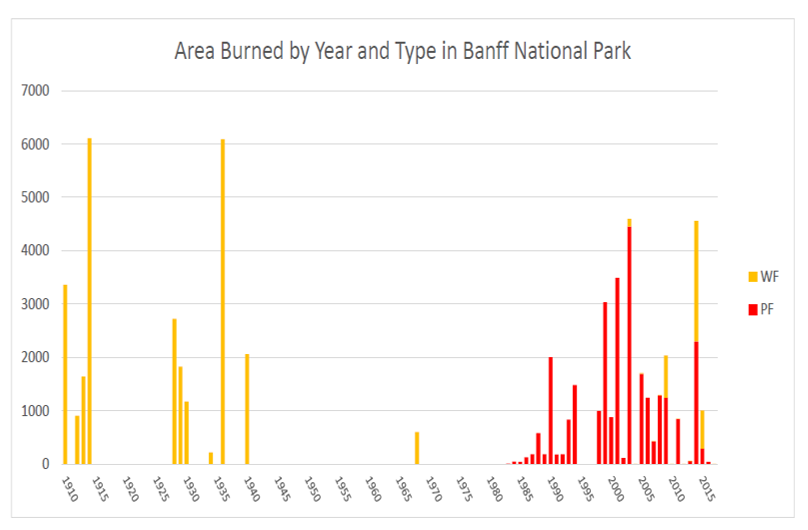 Banff National Park annual burned area (hectares) for the period 1910 to 2017 by type of fire (WF: wildfire, PF: prescribed fire).
Fire Suppression (1880s to 1970s)
By 1950 Banff National Park had an exceptional record of reducing the area burned. This was largely achieved by first removing Indigenous peoples, then controlling fires lit by railway construction, steam engines, and logging operations of the time. By the 1970s increasing number of parks wardens and campground attendants had further reduced unplanned fire ignitions, and as result the park had phased-out hiring of fire suppression crews finding them unnecessary. With low fire frequency, the park’s forests began to age with biomass and fuel levels reaching unprecedented levels.
Prescribed Fire Beginnings: Biophysicals, Bingo Balls and Blowouts (1980s to early 1990s)
In 1982 Parks Canada revised its policy to fire management, requiring parks to assess the role of fire in their ecosystems and begin restoration if necessary. Again, Banff’s environmental and political conditions favoured using the park as a testing ground for new programs. An overly opportunistic perspective was that the park could be delineated into burn units, assigned a long-term “natural” fire frequency based upon biophysical characteristics (terrain etc.), then randomly chose for burning (via a bingo-ball machine initially!) to reflect a relatively random pattern. After several prescribed fires that tended to extend beyond their planned boundaries, Parks Canada recognized the need for a national program to mobilize fire crews and Incident Command Teams. For Banff in particular, park managers recognized that planning and selecting burn units required a strategic landscape approach– not a bingo ball machine.
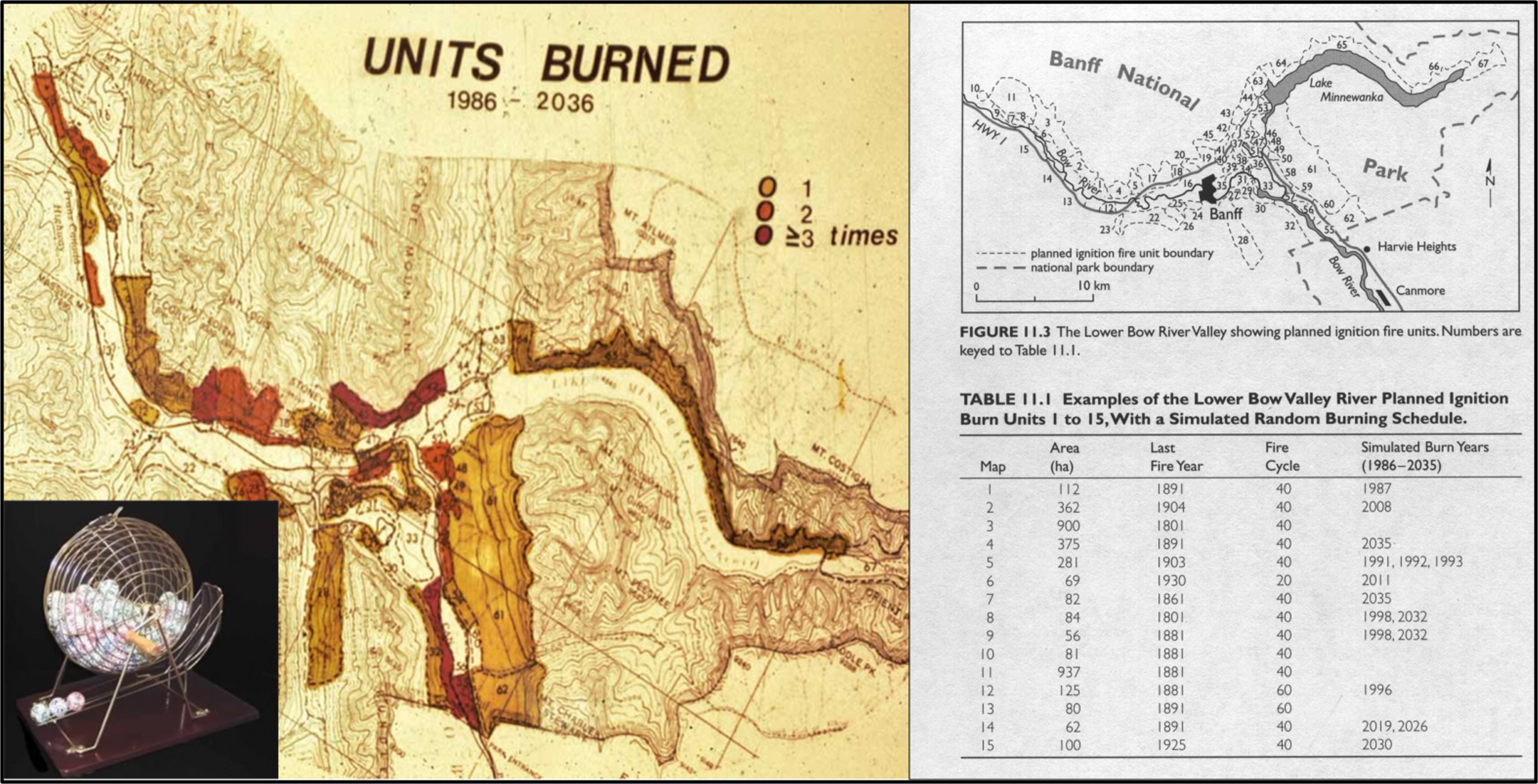
An initial approach to prescribed burn planning on Banff’s Bow Valley that focussed on a simple biophysical mapping of relatively small units that would be randomly selected for ignition. This approach failed by underestimating the potential behaviour of prescribed fires and the need to use larger landscape features to contain them.
More importantly, after trembling aspen did not regenerate in many prescribed burns, it was apparent that Banff’s ecology was seriously out of balance. At first it was thought that simply restoring wolves would reduce the high numbers of elk that were chewing through the young sprouts. However, over time managers recognized that a much broader approach of restoring Indigenous hunting and burning practices would be required– but this broader thinking would take some further years to mature (Pyne 2004, 2014).
Watershed Scale Sequential Prescribed Burns and Containment Zones (1990s to 2010s)
By 1993 a new team of Banff fire managers began to expand the program during this period following several innovative approaches described in the Parks Canada 2009 Banff Fire Management Strategy
- Fully utilize Banff’s mountainous landscape to contain fires. All of Banff’s eastern boundary is ringed with rock with valleys narrow that exit the park though narrow gaps that can contain burns.
- Fully utilize Banff’s relatively predictable southwest winds that occur during warm-dry periods when fires occur. These fires are shaped by terrain, and usually burn the down the main valleys.
- Fully utilize Banff’s snowmelt patterns with warm-dry southwest slopes and cool/moist northeast aspects towards the foothills on its eastern boundary. This favors use of early spring fires on southwest slopes, further narrowing down the gaps where fires later in the season could pass through.
- Where required, cut wide fuel breaks in the narrow zones to further secure fire use. In some cases, these cleared fuel breaks might need to be >1km wide.
- Sequentially start burning up valleys with by smaller, carefully conducted burns upwind of the fuel breaks (anchor units), then increasing burn size and intensity moving up valley and working with relatively predictable southwest gradient winds.
- After securing a valley, areas upwind from the fuel break can serve as containment zones, where escaped fires may not need immediate suppression and can be allowed to burn until rain or snowfall naturally extinguishes them;
- Further, the fire program during this period began to clear large fuel breaks around the communities of Banff and Lake Louise that have been continually expanded since, and worked with the local municipal governments to adopt Fire-Smart standards to reduce the risk of wildfire damage.
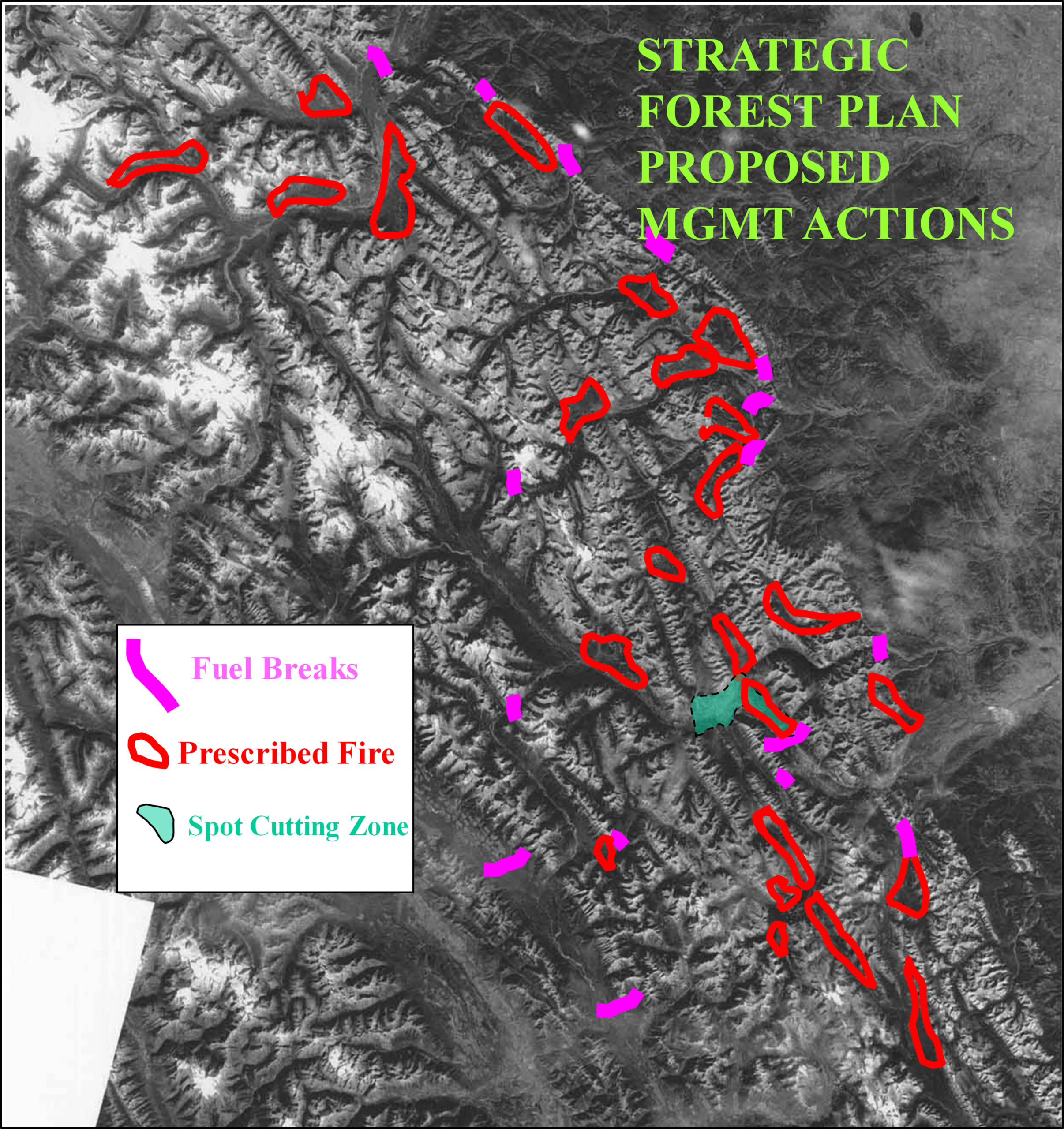
A conceptual view of how a series of fuel breaks could be used to contain large prescribed burns or wildfires in the Rocky Mountain region near the southern mountain national parks. This strategy was used during the period 2000 to 2010 for fire use in a joint BC-Parks Canada-Alberta approach to reduce mountain pine beetle risk.
These innovations allowed Banff’s program to expand substantially, and by 2005 the park achieved its management target of maintaining 50% of the long-term area burned, or about 14 sq km per year. The set piece burn during the period was the Fairholme Prescribed Fire that was contained by early season burning out of the Carrot Creek fuel break and upwind areas against it prior to the hot and dry 2003 fire season. Later in that summer, the fire in the main unit did take a run, but embers could not spot over a 5 km strip of fuel break and forests that had greened up after spring burning. This demonstrated that fuel break operations and maintenance may ultimately focus on containing carefully planned prescribed fires needing wide guards for contingencies (e.g., a hot dry summer).
Bison Burns and Cultural Integration (2010 to 2020s)
A next generation of fire managers took over the reins by 2012. The program in the south part of the park was now led by a woman– bringing this necessary perspective to fire management in the valley for the first time over a century. By now, due to a combination of wolf predation and culling assisted by the Stoney Nakoda, elk numbers declines, and aspen and willow were regenerating across the park. Moreover, Parks Canada biologists were gradually beginning to recognize that long-term Indigenous use played an important role in the ecological integrity of the Canadian Rockies.
However, the new team was confronted by some bureaucratic and public backlash to the aggressiveness of the previous decade in cutting fuel breaks and conducting large fires. The area being prescribed burned began to deline. Further, park superintendents wanted to better integrate the mostly lightning-ignition fire programs in Yoho and Kootenay national parks to the west by reducing the scale of Banff’s prescribed fire program and depending more on unplanned ignitions. This objective was partially met by some large lightning ignited burns in the northern half of the park. However, it was recognized that smaller prescribed fires were required, and these were planned as “meadow burns” with a couple dozen or so in Banff, and many more planned for Yoho and Kootenay. The focus on meadow burning clearly recognized the long-term role of Indigenous people in managing park ecosystems. In fact, some of the larger meadow burns were coordinated with restoring a bison population in the north-east corner of the park. Ultimately linking bison to cultural restoration fire and most recently to Indigenous hunting will likely prove the greatest innovation of the period. However, utilizing the limited areas of “meadow burns” as a primary tool in fire restoration did reduce the annual area burned by the program, and may be a questionable assumption on the long-term role of Indigenous fire use. Past human burning clearly extended well beyond meadows.
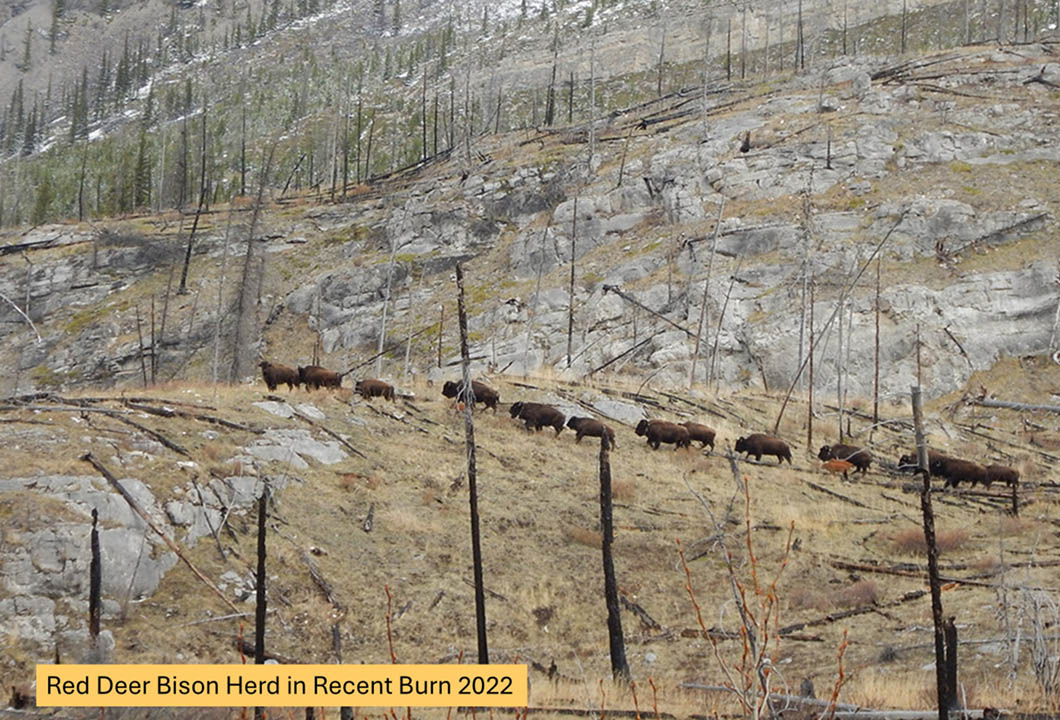
Restored bison moving upvalley through a grassland corridor that was created with several prescribed burns between 1994 and 2014. Indigenous people”s management of the herd will likely continue to follow an eco-cultural approach of linking traditional hunting and burning practices.
The Future: Roof to Region Wildland Fire Management?
The program pattern from 2010 to 2019 was formalized in the Parks Canada 2020 Banff National Park Fire Management Plan and published and fully signed off. Unfortunately, it was essentially out-of-step with the times. By proposing more lightning ignitions, and only limited prescribed fire use, largely with “meadow burns”, the plan was by default allowing biomass to continue to increase, especially in the Bow Valley. The outcome of this direction could only be an eventual unplanned mid-summer blow up fires, and this could potentially consume both the Towns of Banff and Canmore. This hasn’t occurred yet in Banff, but most of Waterton burned in 2017, and Jasper had it’s major fire in July, 2024. These national parks were following a similar directions to Banff’s 2020 plan by providing for only minimal planned forest management in a broad area upwind of towns. The Town of Jasper disaster finally became a wake-up call for the towns of Banff and Canmore surrounded by national and provincial parks with vast forest areas. Hopefully Banff National Park will again prevail as a successful testing ground for innovative fire management to reduce massive levels of biomass and resulting catastrophic fires. The future will require some mix of the following:
- Continued aggressive implementation of community fire-smart standards for buildings and vegetation management.
- Fuel breaks with ongoing maintenance and operational plans surrounding infrastructure;
- Intensive forest management with use of fuel breaks and sequential prescribed burns to reduce biomass.
- In select high priority areas, perpetual mechanical forest management will be required to manage forests. Perhaps the slopes of Sulphur Mountain and Mount Norquay will eventually be managed like the forests of Switzerland where every tree has a number.
Return to main Bow Valley Wildfire Risk Reduction section
References
Eagles, P. F. J. 2002. “Fire Management: Banff National Park Case Study.” In Parks and Protected Areas in Canada, edited by Philip Dearden and Rick Rollins. Oxford University Press.
Parks Canada. 2009. Parks Canada 2009 Banff Fire Management Strategy. Resource Conservation Section. Banff National Park.
Parks Canada. 2020. Parks Canada 2020 Banff National Park Fire Management Plan. Resource Conservation Fire Management Section.
Pyne, S. J. 2004. “Burning Banff.” Interdisciplinary Studies in Literature and Environment 11 (2): 221–48. https://doi.org/10.1093/isle/11.2.221. (Link to paper: Pyne 2004 Burning Banff )
Pyne, Stephen J. 2014. “Fire Management Selected Examples: Banff National Park.” In Fire on Earth: An Introduction, edited by Andrew C. Scott. Wiley.
White, Clifford A., Michael A. Feller, and P. Vera. 2002. “New Approaches for Testing Fire History Hypotheses.” In: Managing Protected Areas in a Changing World, edited by Soren Bondrup-Nielsen, Neil W. P. Munro, Gordon Nelson, J. H. M. Willison, T. B. Herman, and P. Eagles, vol. 4. Science and Management of Protected Areas Association. (Link to paper: White CA 2002 meadows fire history ).