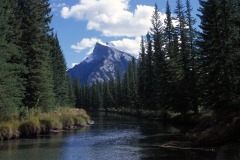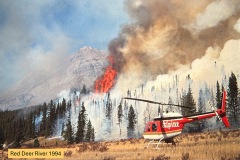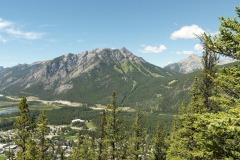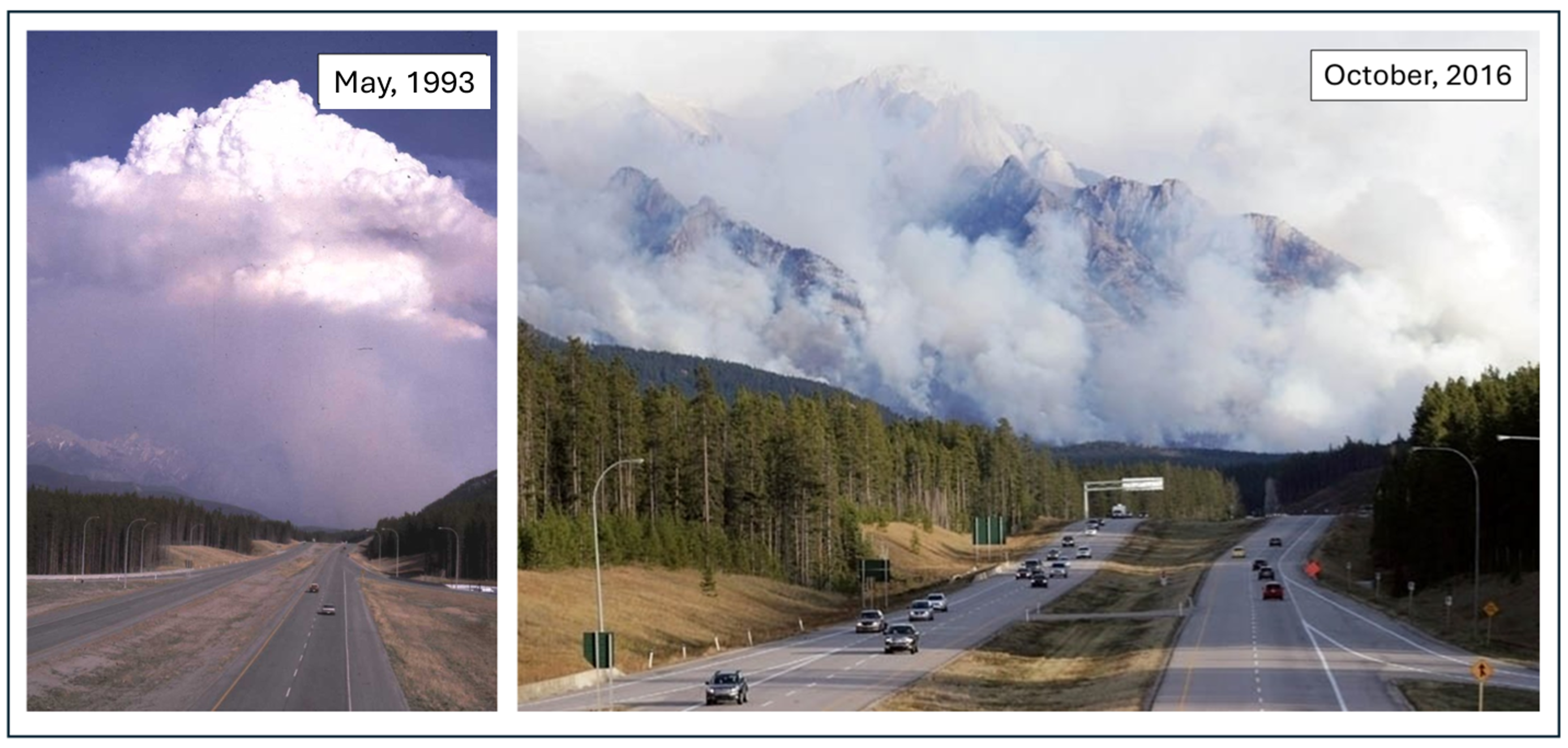
View from Castle Junction of prescribed burning on the Sawback Range in 1993 and 2016. The May 1993 burn was large and moderately intense. The slopes had not been burned for over 70 years, and were cloaked a dense forest of lodgepole pine with a high cover of explosive common juniper in the understory. This combination created some large patches of intense burning, with complete killing of the pine. Due reduced fuels from the 1993 prescribed fire, the fall 2016 burn had lower intensities. Neither burn reached into habitats needed regenerating in the valley’s bottomlands where historic fires which were likely kept as shrublands by Indigenous fires in the spring. The 2016 fire was the last large-area prescribed fire in the Bow Valley, and the only large fire in the valley in the last 2 decades. The aging forests in the foreground are highly susceptible to massive mountain pine beetle mortality.
For over four decades Banff National Park’s fire management program has been one of the most advanced in the northern hemisphere. Recently the program in the Bow Valley have faltered as political realities increasingly constrain prescribed fire use. However, the other options—large timber harvesting cutblocks or massive wildfires—are also controversial management directions for Canada’s first national park. This section describes Banff’s past progress, current problems and some prospective pathways for future fire management as the intermixing of these three sources of combustion create increasingly complex dilemmas.