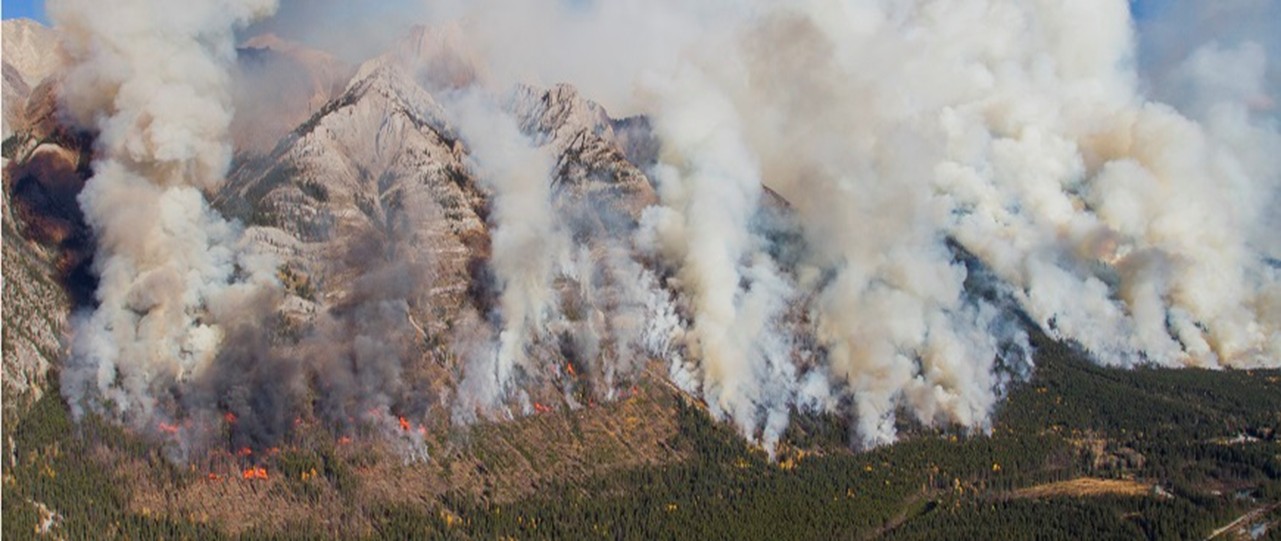
Prescribed burn on the Sawback Range with “Hole in the Wall Mountain” (Mount Cory) in centre, and Bow River and Bow Valley Parkway along the bottom of the photograph. The current parkway follows the route of the historic Indigenous trail (Parks Canada photograph).
For nearly a decade Parks Canada hosted routine open workshops to discuss options to reduce an overly abundant elk herd near Banff townsite that was injury people and over-grazing native plants such as willow and aspen. This “elk advisory committee” meetings include town residents, business owners, environmental group members, wildlife biologists from Parks Canada and the Alberta government, and Indigenous peoples whose homelands included the valley. At one meeting Îyârhe (Stoney) Nakoda Elder Rollinmud described a passage from outfitter Tom Wilson’s recollections. In 1880s Wilson was packing supplies for surveyors for the Canadian Pacific Railway route through the Rockies. Wilson recalled that in 1881 he was leading his pack string up the Bow Valley and that “near Hole-in-the-Wall Mountain we ran into a big forest fire and had to swim the swollen Bow twice” (Wilson 1972).
Then, with a wry grin, Elder Rollinmud informed the group:
“Did you know, my great grandfather lit that fire.”
“Hole-in-the Wall Mountain” is today a known as Mount Cory in the Sawback Range (shown in the image above). Since the glaciers retreated, this has been bighorn sheep range—with their bones rivalling the abundance of bison in the ancient campsites lining the ancient trail following the river along the mountain base. Thus it is not surprizing that the Îyârhe Nakoda were burning in the area during the spring of 1881. This was also an obvious location for Parks Canada to light several prescribed fires between 1985 and 2016 to restore plant and wildlife habitat in the valley. The southwest facing, grassy mountain slopes are snowfree and begin to dry out early in the spring. On their downwind perimeter they are pinched off by a sharp ridge that contains fires lit further upvalley. Likely Rollinmud’s grandfather and other Îyârhe Nakoda had burned the Sawback Range slopes for years, but encountering an Indigenous fire was a clearly a novel experience for Tom Wilson.
The valley bottom presents a unique case of historic human-ecosystem symbiosis that has transformed into a complex fire problem for modern fire managers. During the senior Rollingmud’s time routine burning maintained this as a shrubland of willow, aspen, balsam poplar and saskatoon. This was good habitat for many the roots and shoots of many plant species valuable for human subsistence, and shrublands that were good habitat for beaver, moose, elk, and deer. Periodic burning by the Îyârhe created and maintained these bottomlands as a sun-exposed patchwork of shrublands and summer wetland meadows that are dry in the early spring and could be easily burned when grasses and sedges are cured over the winter (Lewis 1980). This was a classic and complex symbiotic relationship where human ignitions created habitat for numerous species with fuels that once created could be easily burned “early, often, and light” usually during a period of early season low fire danger, and in turn these burnable habitats provided abundant resources for the people themselves.
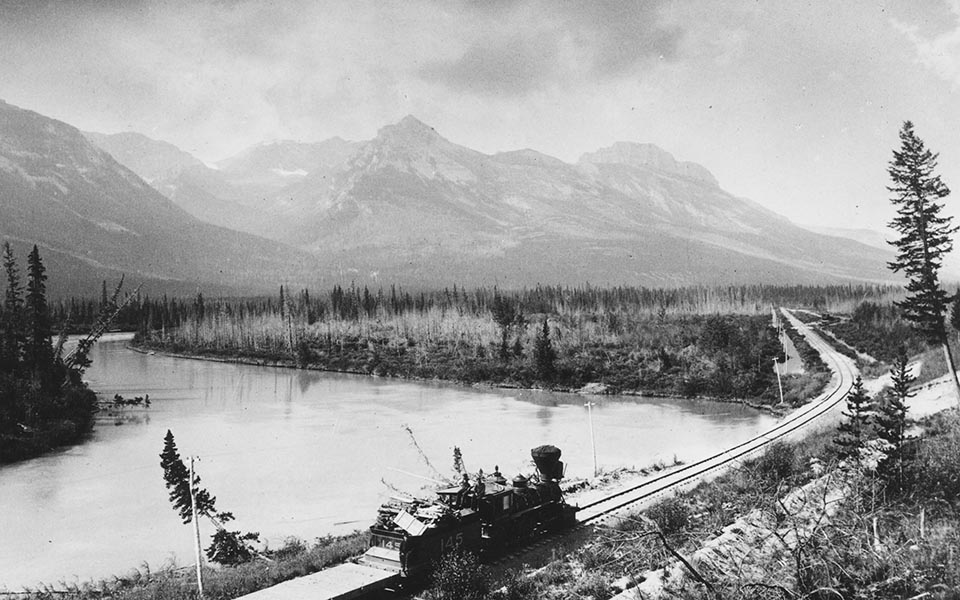
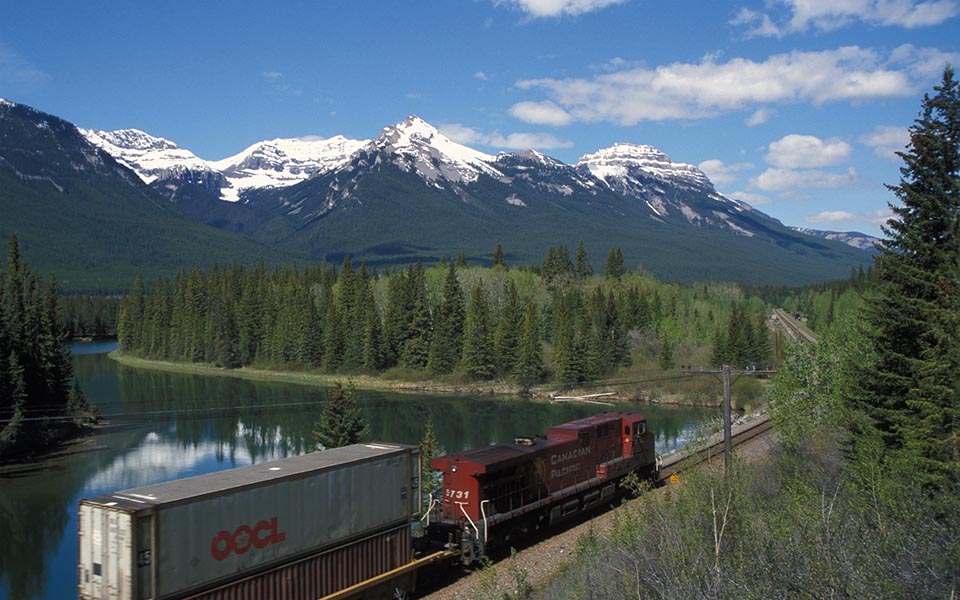
In the decades after railway construction, Banff National Park was established and expanded and the seasonal rounds that brought the Îyârhe Nakoda up the valley each spring ended. Traditional burning ended, and for a time was replaced by ignitions from wood and then coal burning steam engines until ~1910 when spark arrestors were installed. Today, these riparian zones are transitioning into dense spruce forests which reduce habitat diversity and provide a serious wildfire threat. However, due loss of shrublands and grasslands the bottomlands are not easily maintained with prescribed fire. A long-term human-habitat-fire symbiosis has been lost and will likely require some mechanical vegetation manipulation (e.g., partial tree felling and burning) to restore the historic ecosystem.
Return Îyârhe Nakoda Fire to the Sawback Range?
If Canadians want the towns of Banff and Canmore to avoid the fiery fates of Jasper, Waterton Lakes, Fort McMurray and numerous other communities they must encourage national and provincial park managers to re-discover eco-cultural fire stewardship. The growing consensus is that:
Given the recent advancements in our understanding of how Indigenous groups have shaped their lands, we implore researchers to consider collaboration among local Indigenous groups as to better cultivate relationships and foster a greater understanding of their ecosystems.
Although the valley bottom will be an ongoing challenge, prescribed burning on the slopes of the Sawback Range above the Bow Valley Parkway will continue to be a wonderful place for people to re-learn the practices safe cultural burning. Hopefully both park fire crews and Indigenous peoples will work together here to find a new pathway forward for the Bow Valley based upon fire stewardship.
Return to Indigenous Peoples’ Legacy Overview
References
The literature on Indigenous fire stewardship has a long history and is now growing rapidly as our modern society fully appreciates that total fire suppression is not the solution to the wildfire dilemma. Here’s a sampling, and some ties back to the role of Indigenous peoples in the Banff National Park area:
Binnema, T., and M. Niemi. 2006. “`Let the Line Be Drawn Now:’ Wilderness, Conservation, and the Exclusion of Aboriginal People from Banff National Park in Canada.” Environmental History 11: 724–50.
Hoffman, K. M., Davis, E. L., Wickham, S. B., Schang, K., Johnson, A., Larking, T., Lauriault, P. N., Le, N. Q., Swerdfager, E., & Trant, A. J. (2021). Conservation of Earth’s biodiversity is embedded in Indigenous fire stewardship. Proceedings of the National Academy of Sciences, 118(32), e2105073118. https:// doi. org/ 10. 1073/ pnas. 21050 73118
Lewis, Lewis, Henry T. 1977. “Maskuta: The Ecology of Indian Fires in Northern Alberta.” Western Canadian Journal of Anthropology 7 (1): 15–52.
Lewis, Henry T. 1980. “Indian Fires of Spring.” Natural History 89: 76–83.
Schang, Kyle A., Andrew J. Trant, Sara A. Bohnert, et al. 2020. “Ecological Research Should Consider Indigenous Peoples and Stewardship.” FACETS 5 (1): 534–37. https://doi.org/10.1139/facets-2019-0041.
Schepens, Gabriel, Jordan H. Seider, Barry L. Wesley, Darcy L. Mathews, and Brian M. Starzomski. 2024. “Colonial Management Drives Ecological Change Following the Exclusion of Indigenous Stewardship in a Stoney Iyethka Montane Grassland, Canadian Rocky Mountains.” People and Nature 6 (6): 2618–32. https://doi.org/10.1002/pan3.10747.
Stoney Nakoda Consultation Team. 2022. Enhancing the Reintroduction of Plains Bison in Banff National Park Through Cultural Monitoring and Traditional Knowledge: Final Report and Recommendations. Final Report. Stoney Nakoda Tribal Administration. https://a.storyblok.com/f/112697/x/d0b9253d5a/stoney_bison_report_final_rev2.pdf.
Steel, Z. L., Miller, J. E. D., Ponisio, L. C., Tingley, M. W., Wilkin, K., Blakey, R.,Hoffman, K. M., & Jones, G. (2024). A roadmap for pyrodiversity science. Journal of Biogeography, 51, 280–293
Wilson, Tom E. 1972. Trail Blazer of the Canadian Rockies. Glenbow Museum. Calgary, AB.